SPF, DKIM and DMARC Setup for Affiliate Emails

A reliable SPF DKIM DMARC setup for affiliate emails starts with adding your email provider's authentication records to DNS. Then enable signing, test a message, and start DMARC in monitoring mode before blocking failures. Don't worry, if you follow a sequence of steps it's very achievable. It might sound technical, but you don't need to become an email expert to get it working. You need the right records, the right DNS account, and a test that proves your autoresponder is sending properly. Let's work through an…

Continue ReadingSPF, DKIM and DMARC Setup for Affiliate Emails

Why Serious Affiliate Marketers and Business Builders Choose an All-in-One Marketing Ecosystem

Before I dive in, letโ€™s get completely honest right out of the gate as to why I have chosen to focus on an all-in-one marketing ecosystem. It's for people who are actively trying to build a business, solve traffic problems, or upgrade their digital tools. In particular, one I have chosen to use daily. I am a firm fan and user of The Home Business Academy. It's not for every one and certainly not for people who won't put their hand in their pocket to invest…

Continue ReadingWhy Serious Affiliate Marketers and Business Builders Choose an All-in-One Marketing Ecosystem

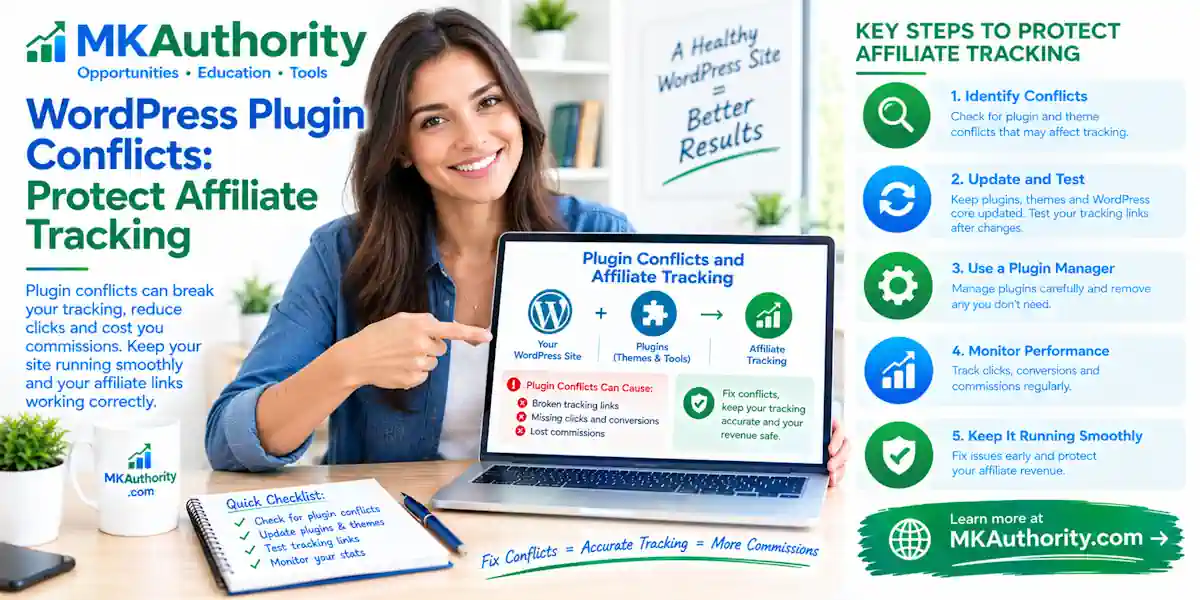
Fix WordPress Plugin Conflicts Without Losing Commissions

To troubleshoot WordPress plugin conflicts, start with the error log, then isolate plugins on a staging copy. If your dashboard is locked out, restore access through your host's File Manager or SFTP first. On an affiliate site, resolving a plugin conflict is only part of the job. Your redirects, opt-in forms, and commission tracking need to keep working too. So, before you start switching plugins off, protect the visitor journey that brings in your leads and sales. Key Takeaways On WordPress Plugin Conflicts Make a full…

Continue ReadingFix WordPress Plugin Conflicts Without Losing Commissions

Affiliate Website Domain Migration: Protect Your Rankings

You can migrate an affiliate website to a new domain with less disruption by preserving your content, redirecting every valuable URL, and testing your tracking. But nobody can promise zero ranking movement during a domain migration. Your goal is to protect traffic and commissions, not simply get the new homepage working. Now, let's get the move organized before you change anything visitors or Google can see. Key Takeaways About Domain Migration Keep your content, layout, and URL paths stable while changing domains. Use direct, permanent 301…

Continue ReadingAffiliate Website Domain Migration: Protect Your Rankings

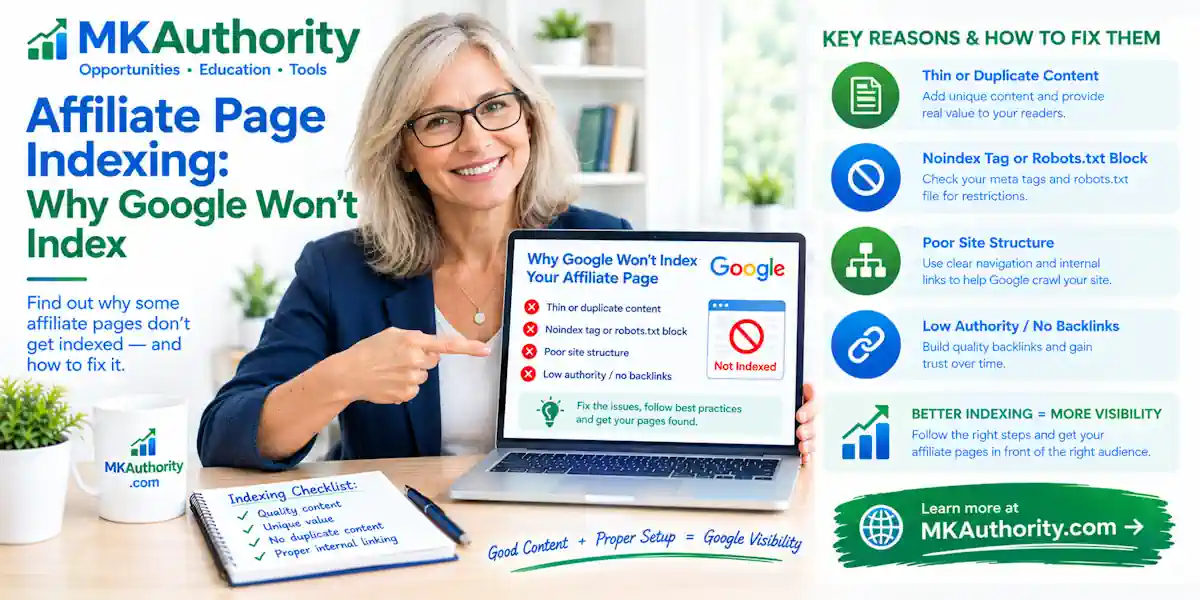
Affiliate Page Indexing: Why Google Stops at Discovery

If you ask Google help, it will tell you affiliate page indexing is the process by which search engines like Google discover, crawl, and store your affiliate review, product, or comparison pages in their database so they can appear in search results. Google can discover an affiliate page without fetching it or adding it to search results. Your first job is finding out where Google stopped, before you rewrite everything or pay for an indexing tool. On affiliate sites, affiliate marketing pages can have weak content,…

Continue ReadingAffiliate Page Indexing: Why Google Stops at Discovery

How to Add `rel=”sponsored”` in WordPress

How to Add rel="sponsored" in WordPress For a rel sponsored WordPress setup, use a sponsored-link setting for commission-based links if your editor provides one. Otherwise, edit the link's HTML and add sponsored inside its existing rel attribute. It's a small change, and it doesn't remove your affiliate tracking ID or stop readers buying through your link. Now, let's get the setting right without installing unnecessary plugins or changing things that already work. Key Takeaways Use rel="sponsored" for commission-earning links, paid placements, and links connected to sponsorships.…

Continue ReadingHow to Add `rel=”sponsored”` in WordPress

What to Do When an Affiliate Program Closes

An affiliate program closure means you need to protect unpaid commissions, stop wasting paid traffic, and replace links that no longer earn. Your existing links might still open, but that doesn't mean you're getting paid. An affiliate marketer can still earn from the audience they've built, even when a merchant lets them down. Start with the money already owed to you, then work through your links and replacement offers step by step. Key Takeaways Save the closure notice, program agreement, and commission reports before dashboard access…

Continue ReadingWhat to Do When an Affiliate Program Closes

Affiliate Programs vs Networks: A Small Publisher’s Guide

When comparing affiliate programs vs networks, your priority should be cleared earnings, not the biggest commission advertised. A useful offer, reliable tracking and a payout you can reach matter more than another account full of links. For a small publisher, affiliate networks make it easier to find brands and manage commissions. Direct programs give you closer contact with one brand, and sometimes better terms. Let's start with what changes for you. Key Takeaways A network account gives you access to merchants, but individual brands can still…

Continue ReadingAffiliate Programs vs Networks: A Small Publisher’s Guide

How to Create an Affiliate Editorial Policy

To create an affiliate editorial policy, write down how you choose products, disclose commissions, evaluate claims, and correct mistakes. Then publish those standards where readers can find them, with a separate disclosure beside each promotion. I like to keep this simple: transparency means readers should understand how you earn money and how you reach your recommendations. Start with rules you can follow consistently, rather than impressive promises that don't match how you work. Key Takeaways An editorial policy explains your standards; an affiliate disclosure explains your…

Continue ReadingHow to Create an Affiliate Editorial Policy

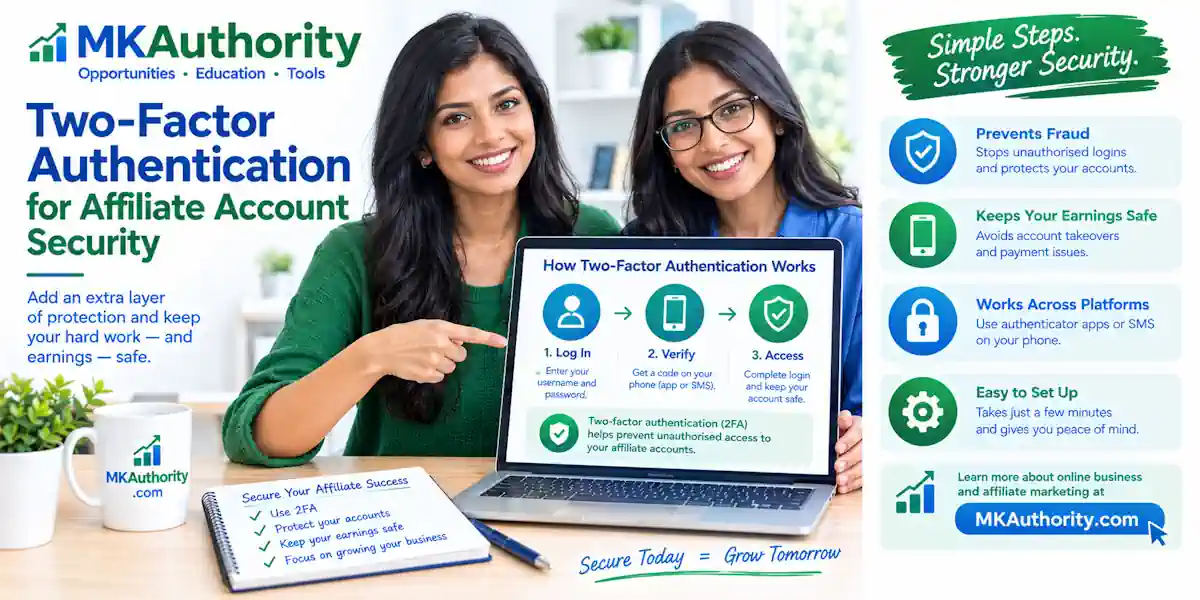
Two-Factor Authentication for Your Affiliate Website

Two-factor authentication (2FA) adds a second identity check to your login, so a stolen password alone usually won't unlock your affiliate website. Start with your email and administrator accounts, then protect hosting, domains, and commission dashboards. You don't need a complicated security setup to make progress. Two-factor authentication works best alongside strong, unique logins, separate credentials, and a recovery plan that works when your phone doesn't. Let's start with what that second login step does. Key Takeaways Use a security key or passkey where available, with…

Continue ReadingTwo-Factor Authentication for Your Affiliate Website