 Malcolm Keith 2026
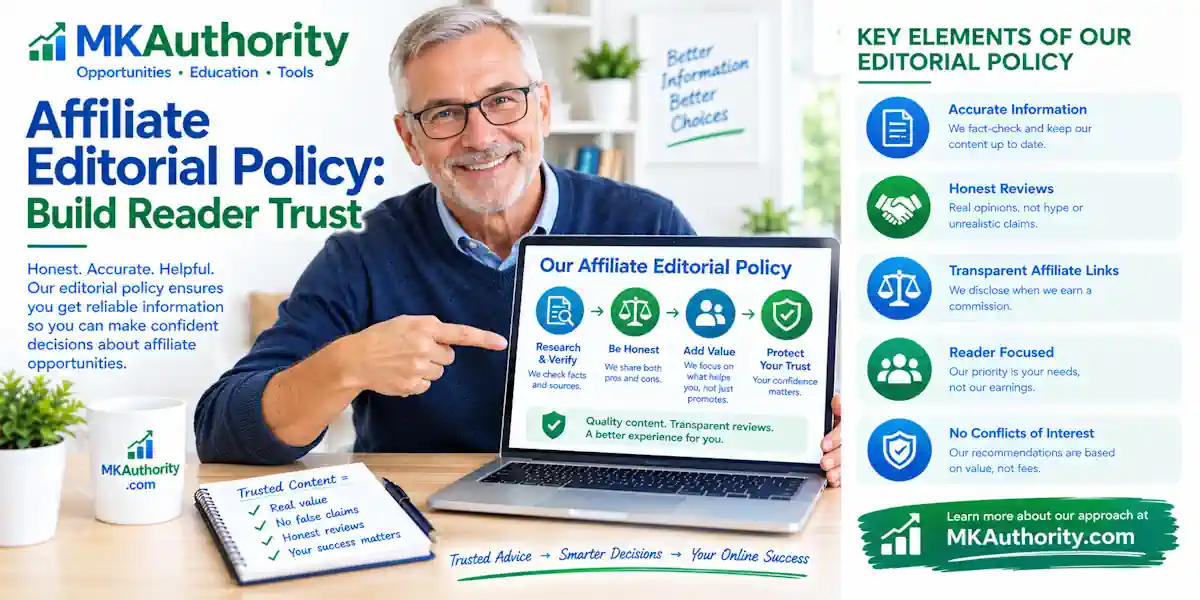


To create an affiliate editorial policy, write down how you choose products, disclose commissions, evaluate claims, and correct mistakes. Then publish those standards where readers can find them, with a separate disclosure beside each promotion.
I like to keep this simple: transparency means readers should understand how you earn money and how you reach your recommendations. Start with rules you can follow consistently, rather than impressive promises that don’t match how you work.
Key Takeaways
- An editorial policy explains your standards; an affiliate disclosure explains your financial relationship.
- Readers need clear commission disclosures where recommendations appear, before they click affiliate links.
- Product selection, ratings, sponsorships, and corrections need written rules.
- A public policy is useful, but your publishing process must support every promise it makes.
1. Define What Your Affiliate Editorial Policy Covers
Separate legal duties from your own standards
US advertising law prohibits deceptive endorsements. The FTC’s endorsement guidance from the Federal Trade Commission (FTC) explains how to disclose material connections clearly and conspicuously.
Those connections include commissions, payment, free products, and discounts that could affect how someone views your recommendation.
A standalone editorial policy is a recommended transparency practice, not a blanket FTC requirement for every affiliate website. A clear affiliate disclosure and truthful claims remain necessary whether you publish that policy or not.
Explain who controls the recommendation
Your policy should identify who selects products, writes reviews, and approves changes.
For a solo website, that can be straightforward. Say that you make the editorial decisions, then explain any outside involvement.
If a merchant can review technical details before publication, define the limit. Correcting a feature description is different from letting the merchant remove criticism or approve your verdict.
2. Set Rules for Selecting and Evaluating Products
Make each recommendation earn its place
Start with the reader’s problem. Does the product offer useful training, save time, provide suitable tools, or solve a clear business need?
Write down your selection criteria. For marketing software, those might include usability, total cost, limitations, support, cancellation terms, and suitable alternatives.
I wouldn’t use commission size as a product-quality score. A generous payout doesn’t tell you whether a beginner will get useful training or dependable support.
A product doesn’t need to participate in an affiliate program to qualify for coverage. Comparisons should include suitable products without affiliate programs, even if they don’t pay.
Tell readers what you evaluated
Separate hands-on use from research. Reading a sales page doesn’t support a claim that you tested the product.
Explain whether you purchased access, received free access, used a trial, or relied on documentation. For training, say how much you completed.
My affiliate product review template helps organize that information around a buying decision.
For business opportunities, distinguish traffic from buyers and gross commissions from cleared payouts. A screenshot doesn’t establish what a new customer can expect to earn.
3. Explain Commissions Without Weakening Editorial Independence
Use disclosure wording people understand
Your affiliate disclosure should explain the financial relationship in plain language, rather than assume readers understand affiliate marketing terminology.
A clear example is:
I get commissions for purchases made through links in this post.
That sentence isn’t mandatory wording for every website. It demonstrates the plain-language approach your disclosure needs.
Place your notice before readers reach any affiliate links, product button, or linked comparison table. The FTC’s standard is clear and conspicuous disclosure with the endorsement, so a footer or separate policy alone isn’t enough.
My FTC affiliate disclosure examples cover additional wording for reviews and promotional emails.
State whether compensation affects ratings
Don’t leave readers guessing about this.
For independent reviews, a strong rule is that commission rates don’t determine ratings, rankings, or conclusions. Apply the same evaluation criteria to paying and non-paying products.
If you sell a sponsored placement, label it and keep it separate from independent rankings. Explain whether the advertiser supplies the copy or has approval rights.
Disclose free access separately when relevant. Explaining commissions doesn’t automatically tell readers that the merchant also provided the product.
4. Match Disclosures to Each Publishing Channel
Blog posts, emails, and social posts
On a blog, a short introduction followed by the disclosure works when no affiliate promotion appears first. Keep the notice readable on mobile.
Each promotional email needs its own disclosure. A notice in the welcome email doesn’t explain every later promotion.
On social media, put the disclosure before the “read more” cutoff. The FTC’s social media guidance stresses noticeable, understandable wording.
For an affiliate promotion, you could write: “I earn a commission if you buy through this link. #ad.” The #ad tag is a supplementary cue, not a substitute for clear wording. Don’t bury the disclosure among unrelated hashtags.
Videos need disclosure inside the video
Say the financial relationship aloud and show readable disclosure text when the recommendation appears. Include clear wording near affiliate links in the description too.
A description alone won’t reach everyone watching the video.
For content covered by YouTube’s paid-promotion rules, use its paid-promotion declaration setting. That adds a platform label, but it doesn’t replace your own explanation.
Match every notice to the actual arrangement. A free review account, an affiliate commission, and a paid sponsorship aren’t interchangeable.
5. Add Amazon’s Required Identification
Amazon Associates has an identification requirement alongside your general disclosure responsibilities.
The Amazon Associates Operating Agreement gives this statement:
“As an Amazon Associate I earn from qualifying purchases.”
The agreement also permits a substantially similar statement previously allowed under it. Using the current sentence keeps your wording simple.
Termly’s Amazon disclosure examples document older wording about participating in the Amazon Services LLC Associates Program, recommended until October 2019. That historical wording isn’t the clearest starting point for a new policy.
Your content workflow also needs Amazon-specific publishing rules. Check current Amazon Associates requirements when reviewing its program policies. Those policies restrict displaying prices and availability. Permitted routes include Amazon-served links or data obtained through its approved APIs, subject to their requirements.
Keep those operational rules in your publishing checklist. Your public policy should explain your standards without becoming a copy of every affiliate agreement.
6. Publish the Policy and Build a Correction Process
Give readers a permanent place to find it
Publish a dedicated editorial policy page. Link to it from your footer, About page, and relevant reviews.
Keep the full policy separate from the short commission notice beside a recommendation. Both have a job to do.
Link to your privacy policy where you explain affiliate tracking. Many programs use cookies or other attribution methods, but disclosure doesn’t replace consent where consent is required. Explain whether your tracking uses cookies and, when known, how it handles attribution.
Your privacy policy and consent process should address cookies where applicable law requires consent. My affiliate data privacy guide explains that distinction.
For repeated notices, WordPress Gutenberg offers synced patterns, formerly reusable blocks. Editing a synced pattern updates its connected instances.
Explain what happens when information changes
Choose a review schedule you can maintain. Quarterly reviews are a practical starting point for software, training, and business-opportunity content.
Also define event-based updates. A major pricing change, discontinued feature, billing problem, or closed program shouldn’t wait for the next scheduled review.
State how readers can report errors and who handles them. Correct material mistakes promptly, and add a correction note when the original information could have affected a purchase.
Use an updated date for meaningful revisions. Changing the date without reviewing the recommendation gives readers the wrong impression.
A Copy-Ready Affiliate Editorial Policy Template
Use this wording as a starting point. Keep only commitments your actual publishing process supports.
How I choose products and earn money
“My purpose is to help readers make informed decisions about online tools, training, services, and business opportunities.
“I select products based on relevance, practical usefulness, cost, limitations, support, and available alternatives. Products don’t need an affiliate program to receive coverage.
“Some links earn me a commission when readers purchase or complete a qualifying action. I disclose these relationships near the relevant recommendations. I also identify paid sponsorships and free products or access.
“Commission rates don’t determine my ratings, rankings, or conclusions. Sponsored placements are labeled separately from independent recommendations. Advertisers cannot buy a favorable review or require me to remove supported criticism.”
How I evaluate information and handle changes
“I distinguish personal use from research based on documentation and other sources. Each review explains the scope of the evaluation and any important limits.
“I assess factual claims against available evidence. A merchant’s sales claims aren’t treated as independently proven results. Earnings examples aren’t presented as promises of what readers will achieve.
“I review time-sensitive content quarterly and update material information when significant changes become known. I correct errors promptly and explain substantial corrections when they could affect a buying decision.
“Readers can report concerns through this website’s contact method. I consider those reports when reviewing content, while retaining responsibility for editorial decisions.”
Frequently Asked Questions
Does US disclosure guidance matter if I live elsewhere?
Yes. US rules can apply when effects on US consumers are reasonably foreseeable. Local advertising and privacy laws may also apply.
Does a disclosure protect exaggerated income claims?
No. It explains your financial relationship. It doesn’t make unsupported earnings claims, fake guarantees, or misleading testimonials acceptable.
Can I combine affiliate marketing with several ad networks?
Yes. Google AdSense permits other ad networks on the same site or page and allows affiliate links. Check Google AdSense’s current content and ad-placement policies. Advertising must still follow applicable policies, avoid disrupting the user experience, and leave the main content as the priority.
Must I publish my exact commission rates?
A clear disclosure generally needs to explain that you earn commissions, not list every percentage. Your policy should explain whether compensation affects selection or placement.
Make Your Policy Match Your Recommendations
A useful affiliate editorial policy gives readers transparency into how you make recommendations, what you evaluate, and how you handle mistakes.
Start with standards you can maintain. Publish them clearly, then apply them to every review, comparison, email, and promotion.
An honest recommendation can earn a commission. Readers deserve to understand both parts before they buy.