 Malcolm Keith 2026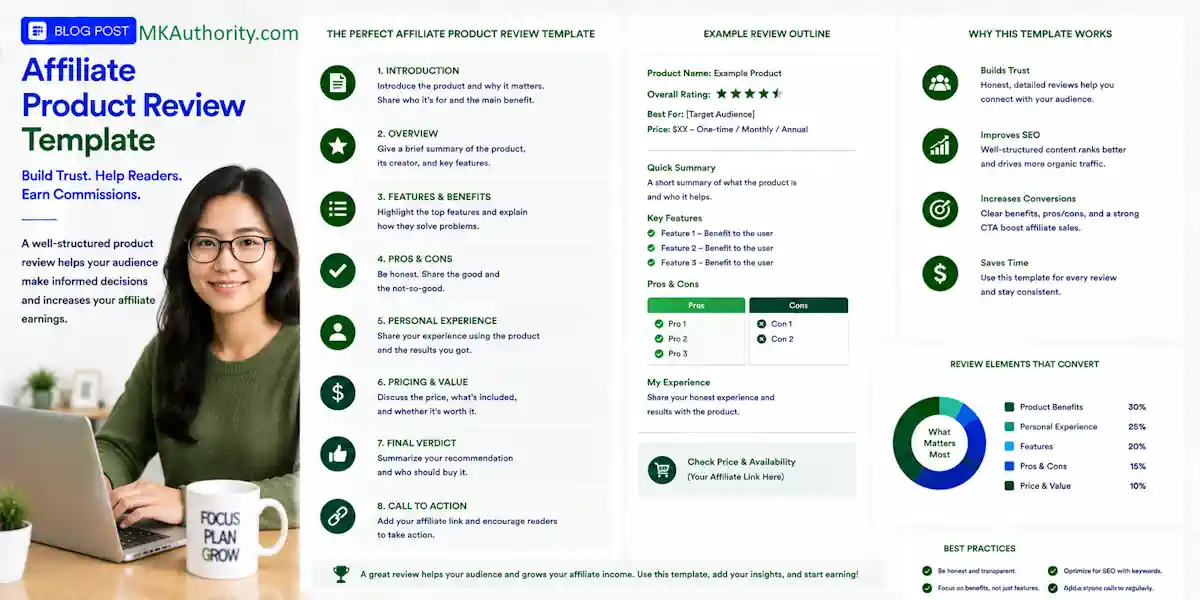

An affiliate marketing product review isn’t a sales page or a landing page template with warning labels added later. Thin product reviews fail when buyer fit isn’t clear, so readers leave or buy the wrong thing. Creating a high-converting affiliate product review template needs to use a clear, structured layout that builds trust and guides readers directly to your affiliate link
A good affiliate product review template keeps the page useful while giving it a real chance to earn. It tells people what you know, what you could not verify, what the product costs, and when another option is smarter.
Start with the buyer’s question, not your commission rate.
Key Takeaways On Using An Affiliate Product Review Template
- Start with a specific buyer and problem, then recommend products you can honestly judge or clearly explain how you researched.
- Put a clear affiliate disclosure near the top of the review and state what you tested, what you could not verify, and how pricing was checked.
- Lead with a direct verdict, buyer fit, and reasons to skip the product so readers can make an informed decision.
- Support the verdict with evidence, accurate pricing, specific pros and cons, useful alternatives, and calls to action that match buyer intent.
- Keep reviews updated, track clicks and conversions, and avoid fake urgency, unsupported claims, invented ratings, or misleading income promises.

Start With a Product You Can Actually Judge
In affiliate marketing, hype is easy. Buyer-focused content takes more work, but it stops you promoting every shiny offer that lands in your inbox.
Product reviews work best when they begin with a clear problem for a target audience. A focused product review gives potential customers a useful answer. That helps you build a site readers return to when ready to buy.
Pick a buyer and a problem first
Tools, training, traffic sources, and home-business offers are not for everybody, so define your buyer before choosing an offer. A beginner who needs low-cost guidance has specific needs that differ from an experienced marketer running paid ads.
Write one sentence before you begin: “This review is for [type of person] who wants [outcome] without [common pain point].” It defines your ideal customer and keeps your review on track.
If you are still choosing what to promote, these tips on affiliate offers for beginners can help you avoid products that are too complex, unclear, or hard to explain. Plan your review posts before drafting, then turn your research notes into a short buying guide.
Gather proof and set your limits
First-hand use is great, but don’t pretend you tested something when you did not. Keep notes on setup time, support replies, features used, results, price changes, and problems.
If you only researched the product, say so. Read the sales page, terms, user documentation, pricing page, and independent customer feedback. Separate vendor claims from your own opinion.
A simple line such as “I have reviewed the training materials, but I have not completed the full program” is far more believable than a made-up success story.
Put Disclosures Where Buyers Can See Them
Your affiliate disclosure is part of the review, not a tiny legal notice buried in the footer. Every product review should disclose the relationship before the first recommendation. Readers should know about it before reaching a recommendation button.
Make the commission relationship plain
Put a short disclosure near the top of the page, before the first affiliate link. Keep it normal and clear:
This review contains affiliate links. If you buy through one of my links, I may earn a commission at no extra cost to you.
The FTC’s Endorsement Guides FAQ explains why a material connection in affiliate marketing needs clear disclosure. You can also use these FTC affiliate disclosure examples when you need simple wording that doesn’t sound like legal fog.
Say what you tested and what you did not
Disclose the relationship, then disclose the scope. Transparent product reviews should set clear expectations. Tell readers whether you bought the product, received access, used a free trial, or researched it without hands-on use.
For Amazon content, Amazon affiliates must identify themselves. Review Amazon’s Associate identification requirements and use the required wording where it applies.
Disclosures and product claims need to follow applicable laws, affiliate program rules, and platform policies. The rules matter, but so does common sense. Don’t treat a vendor’s marketing sales claims as independently verified evidence.
Affiliate Product Review Template: Start With a Decision
The opening of your review should give the reader a fast, honest answer. Place it directly below your disclosure, where it can frame the first call to action, then support it throughout the page.
Give a straight verdict and buyer fit
Copy and adapt this section for each product review:
[Product name] in a nutshell
[Give your verdict in two sentences. State the main benefit and the biggest limitation.]
Best for: [Describe the buyer, their skill level, goal, and specific needs.]
Skip it if: [Name the budget, feature, time, or support need it does not meet.]
Price checked: [Add the date, plan, billing terms, and important extras.]
My recommendation: [State whether you recommend it, and under what conditions.]
Don’t write “This is the best tool for everyone.” That tells a buyer nothing.
A Semrush review, for example, can say it suits marketers who regularly use keyword research, site audits, and competitor data. It may not suit somebody who only needs a simple, free rank checker once in a while. Apply this verdict format consistently across product reviews, while tailoring the buyer fit to each product.
Tell the wrong buyer to walk away
The “not for” line is where trust starts to build. Mention a missing feature, a learning curve, a limited budget, or a refund policy that may not suit the reader.
A buyer who should skip the product is not a lost conversion. It is a refund, complaint, or disappointed subscriber you avoided.
This part of the product review template keeps your recommendation from sounding like a sales pitch written for every human on earth.
Show Proof, Pricing, and Real Limitations
The middle of a product review earns the verdict at the top. Features alone don’t help much unless you explain what they do for a real buyer.
Explain what you checked
Use this reusable proof section in your product review:
What I checked
[Mention the setup process, key features, support, dashboard, training modules, or physical product details you examined.]
What I could not verify
[State any results, long-term performance, or claims you could not test.]
What changed my opinion
[Share one useful detail, limitation, or surprise that affected your verdict.]
For software, show your own dashboard screenshots or short walkthrough images when possible. For physical products, include your overall experience with setup, use, packaging, and support, plus clear photos of the product in normal use.
High quality images reduce doubt and make product reviews more credible. A blurry stock photo tells the reader far less than a screenshot of the actual pricing screen or a photo of the product beside a familiar object.
Give accurate prices, not fake urgency

A product review should explain the price you checked, the date you checked it, and whether it is monthly, annual, one-time, or recurring. Mention trial periods, renewal pricing, shipping, and add-ons when they affect value for money or the decision.
Never use “price going up tonight” unless you can verify it. Never claim stock is running out because a sales page uses a countdown clock.
If you use Amazon links, pair your review with the right program wording. These Amazon affiliate disclosure examples can help you keep Amazon language separate from your broader disclosure.
Make Pros, Cons, and Alternatives Useful
Pros and cons lists work because buyers expect balance. Product reviews work when that balance feels specific and honest. They do not work when the pros are vague and the cons are little more than “some people may not like it.”
Write pros and cons with conditions
Tie every point in each product review to something a buyer can understand or verify.
- “[A benefit] helps if you need [a real outcome or use case].”
- “[A limitation] becomes a problem when you need [a missing feature, lower cost, or faster setup].”
- “[A support, refund, or compatibility issue] may matter before you commit.”
Keep the list short. Three honest strengths and two real limitations beat ten fluffy bullet points.
Pros and cons are not there to make the offer look balanced. They are there to help somebody decide if the product fits their situation.
Recommend alternatives by need
Name one or two alternative products when they solve a different buyer problem. One option may cost less. Another may include better training, simpler automation, or stronger reporting.
This is also smart for affiliate sales and affiliate marketing. Potential customers who aren’t right for Product A may still be a good fit for Product B. A short product comparison can make the key differences clear. Link to relevant products or review posts when an alternative deserves more detail.
If a review gets clicks but no sales, look at offer fit and conversion rates before changing everything else. These ideas for improving product review conversions can help you spot weak comparisons, unclear pricing, and mismatched traffic.
Use Calls to Action That Match Buyer Intent
A generic “Buy Now” call to action can feel pushy when a visitor is still comparing options. In a product review, the next step should match what they need at that point.
Give the reader a sensible next step
After pricing and the main strengths and limitations, use button text that says what happens next. Good examples include “See current price and plan details”, “Start the free trial”, or “Compare this with [alternative]”.
Put the main recommendation first, then give the cautious buyer a second path. That could be a comparison table, an alternative review, or a guide to the product’s refund terms.
When you are using paid traffic, a review page often works better as a pre-sell step than a blind direct link. A simple landing page template, paired with an affiliate bridge page setup guide, can help you organize that flow.
Build a reusable WordPress review layout
A clean review layout can use Gutenberg blocks, reusable patterns, or Elementor sections. It can support future review posts as your site grows. Keep the same basic order on each product review page, then apply it across product reviews: disclosure, verdict, buyer fit, proof, pricing, strengths and limitations, alternatives, and next steps.
Elementor templates work with many modern WordPress themes, and you can save reusable sections or blocks as Elementor templates. Your WordPress theme’s styling can affect page width, buttons, fonts, headers, and mobile spacing. Check the page on a phone before publishing.
You can also use review schema when it describes a real review with facts you can support. Do not invent star ratings, customer counts, or test scores just to make a search result look prettier.
Publish, Measure, and Keep It Honest
Publishing isn’t the finish line: prices change, features disappear, support quality shifts, and affiliate programs update their rules. Older product reviews need periodic updates, so refresh related review posts and affiliate content when those changes affect a buyer’s decision.
Check claims before each update
Recheck every strong claim before updating a product review. If a vendor says a traffic tool creates “unlimited buyers,” treat that as marketing copy, not a fact. Apply the same caution to courses that claim they can replace a job.
Don’t turn testimonials into promises. Don’t show income screenshots without context. A claimed result may depend on ad spend, audience, experience, follow-up, refund rates, and timing.
For Amazon reviews, disclosure placement matters as much as the words themselves. This overview of Amazon affiliate requirements is a useful reminder to keep disclosures visible near recommendations.
Track the numbers that tell the truth
In affiliate marketing, track affiliate sales, affiliate conversions, and conversion rates separately. Also watch outbound clicks, unique visitors, refunds, reversals, and cleared commissions.
A high click-through rate can look awesome, but it doesn’t pay your bills when clicks don’t come from the right potential customers.
For paid traffic, use this estimate before increasing your budget:
Expected commission per click = sales conversion rate x commission per sale x (1 – refund and reversal reserve).
A $35 commission at a 2% sale rate is $0.70 per click before reversals. Hold back 20% for refunds and reversals, and the estimate is $0.56 per click. That’s a rough ceiling, not a safe amount to pay for traffic after software, tracking, and email costs.
Frequently Asked Questions About An Affiliate Product Review Template
What should an affiliate product review include?
An effective review should include a clear verdict, ideal buyer, reasons to skip the product, proof of what you checked, pricing, pros and cons, alternatives, and a relevant call to action. It should also explain any limits in your testing or research.
Where should I place an affiliate disclosure?
Place a short, clear disclosure near the top of the page before the first affiliate link or recommendation. Also explain whether you bought the product, used a trial, received access, or reviewed it without hands-on use.
Can I review a product I have not personally tested?
Yes, but you must say that you researched the product rather than implying personal experience. Use the sales page, documentation, pricing details, terms, and independent customer feedback, and separate vendor claims from facts you can verify.
How often should affiliate product reviews be updated?
Review them whenever prices, features, support, refund terms, or affiliate program rules change, and check important claims during each update. Older reviews should be refreshed periodically so buyers are not relying on outdated information.
What should I track after publishing a review?
Track outbound clicks, affiliate sales, conversion rates, refunds, reversals, unique visitors, and cleared commissions. A high click-through rate is not enough if the traffic is poorly matched to the product or does not result in sales.
Final Thoughts On Using This Affiliate Product Review Template
You do not need fake ratings, wild claims, or pressure tactics to make affiliate reviews work. You need a clear verdict, solid evidence, accurate pricing, honest limits, and a recommendation that fits the reader.
Use this affiliate product review template every time you review an offer. Buyers will make better decisions, and the trust you build will outlast any single commission.