 Malcolm Keith 2026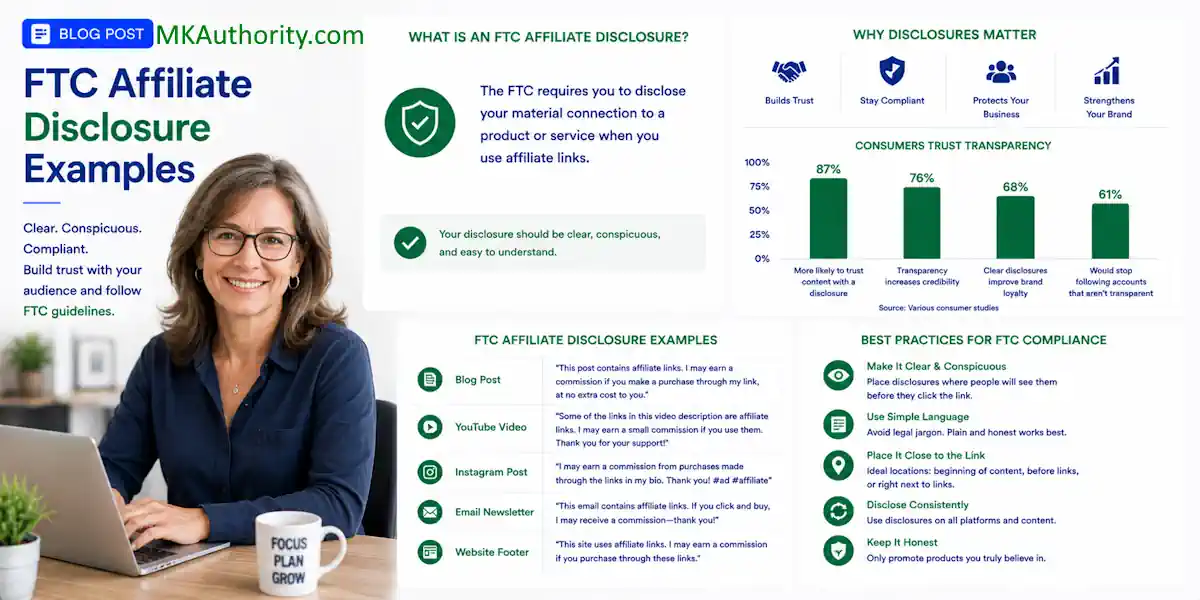

A hidden commission can make an honest recommendation in affiliate marketing look like a sales trick. Your FTC affiliate disclosure tells people upfront that you may earn money if they buy through your link.
That doesn’t need to sound like legal gobbledygook. Meeting Federal Trade Commission expectations means your note must be clear, easy to spot, and placed before someone clicks affiliate links.
Following proper disclosure requirements protects your business and builds consumer trust. The best examples are short, direct, and written like a real human being.
Whether you’re promoting affiliate marketing tools, traffic programs, courses, or a home-business offer, here’s how to say it without confusing your readers.
Key Takeaways On FTC Affiliate Disclosure
- An affiliate relationship, or any material connection or financial relationship with a brand, should be disclosed whenever it could affect how a reader sees your recommendation, aligning with current Federal Trade Commission endorsement guides.
- Put the notice before, or right beside, the first affiliate link or promotion, making sure the placement meets clear and conspicuous standards.
- Use plain English such as “I may earn a commission if you buy through my link.”
- A footer, separate disclosure page, or tiny print alone is not enough to satisfy specific disclosure requirements for blogs and emails containing affiliate links.
- These examples are educational templates, not legal advice, and your affiliate program, country, and business situation may have extra rules to consider for legal compliance.
What an FTC Affiliate Disclosure Needs to Do
The Federal Trade Commission cares about whether a typical person can understand your relationship with the company you are recommending. If you earn a commission, got a free product, received a discount, or have another financial relationship, that connection can matter. When engaging in affiliate marketing, creators must ensure every material connection is stated plainly to maintain consumer protection and avoid deceptive advertising.
The Federal Trade Commission’s Endorsement Guides FAQ makes the point clearly. According to official endorsement guides, any material connection that people would not expect should be disclosed in a way that is clear and conspicuous. This is especially vital when writing product reviews where monetization is involved.
In normal blogger language, don’t hide the good stuff at the bottom of a long article.
Don’t use vague words like “partner link” and assume everyone knows what it means. And don’t make people hunt through a Terms page to find out you get paid through an affiliate program.
If a reader can reach the affiliate links before seeing your disclosure, the placement is probably too late.
Your affiliate disclosure doesn’t need to stop you from recommending products. Far from it. It gives you a chance to be straight with your audience. Most people understand that bloggers and creators get paid through affiliate marketing. What they don’t like is feeling that somebody tried to sneak it past them, which can trigger investigations into deceptive advertising.
This is especially important with business-opportunity and income-related products. If an offer has a cost, say so. If results take work, say that too. A screenshot of one commission from an affiliate program is not proof that a new buyer will get the same outcome, and regulatory compliance demands honesty here. A clear and conspicuous warning protects both the buyer and the seller.
Your content can still be upbeat. It can still sell. It simply needs to be honest about the financial relationship and realistic about the result. When you publish in-depth product reviews with affiliate links, make sure the required material connection is visible right away so consumer protection standards are met.
For a site-wide reference, you can see a plain-language affiliate disclosure example that explains commissions without making the page sound like it was written by a robot.
FTC Affiliate Disclosure Examples for Blog Posts
A proper FTC affiliate disclosure should appear near the beginning of your post, right before the first affiliate link. Put it below the introduction, above a product box, or directly before your first recommendation.
Here are several templates you can adapt for your site.
A simple disclosure for product reviews
Use this when writing product reviews for software tools, training courses, traffic sources, or when evaluating third-party products.
Disclosure: This post contains affiliate links. If you buy through one of my links, I may earn a commission on sales at no extra cost to you. Whether you are reviewing third-party products or standard items, I only recommend tools I believe may be useful, but always do your own research before buying.
This works because it answers the main question fast. You may get paid a commission on sales. The buyer doesn’t pay extra. They should still make their own decision.
A disclosure for a comparison article
Comparison posts can get more clicks because readers are already deciding between multiple products. That makes transparency in affiliate marketing even more important.
Disclosure: Some links in this comparison are affiliate links. That means I may earn a commission if you choose to purchase through them, at no extra cost to you.
Don’t let a commission decide the winner of your product reviews. If one tool has weak support, expensive upsells, poor tracking, or features you don’t like, say it. Your readers aren’t looking for a cheerleader. They want help making a better decision.
A disclosure for a tutorial or how-to post
Tutorial posts often include affiliate links naturally because you’re showing tools in action. Sometimes bloggers and social media influencers receive free products or commissions to showcase tutorials, making an FTC affiliate disclosure vital.
Quick disclosure: I may earn a commission if you purchase a tool mentioned in this guide through my link. This doesn’t change what you pay, even if I received free products or review units for testing.
Place this before the first tool link, not after five steps and three buttons. If you mention a tool several times throughout a long guide, adding “(affiliate link)” beside key links can help keep things clear.
A disclosure for an affiliate bridge page
Bridge pages are usually short, and they are a common tactic in affiliate marketing. That means there is nowhere to hide a notice, and that’s a good thing.
Disclosure: This page contains an affiliate link. If you decide to purchase through it, I may earn a commission. Your price stays the same.
Keep it visible above the main call-to-action button. A good affiliate bridge page disclosure setup keeps the message short, honest, and easy to see on a phone.
A disclosure does not repair misleading copy. If your page says “guaranteed daily income” or hints that buyers will get rich with no work, adding one line about commissions won’t fix the problem. Say what the product is, who it may suit, what it costs, and what the buyer should realistically expect.
Affiliate Disclosure Examples for Email Lists
Email is more personal than a blog post. Your subscribers invited you into their inbox, so don’t burn that consumer trust for a quick click. Ethical email marketing relies on transparent advertising practices, especially when sending messages to subscribers.
When an email promotes an affiliate offer, place the disclosure near the top. The subscriber should see it before the main pitch, before the linked button, and before any affiliate links. Make sure your notice is clear and conspicuous so mobile readers catch it immediately.
A short newsletter disclosure
This is good for a quick recommendation in a regular newsletter.
Affiliate disclosure: I may earn a commission if you purchase through affiliate links in this email, at no extra cost to you.
Short. Clear. No mystery.
A disclosure for a dedicated promotion
If the whole email promotes third-party products, be more direct about your affiliate marketing efforts.
Before I share the details, please know that this is an affiliate promotion. If you purchase through my link, I may receive a commission on sales. I am sharing it because I think it may help with [specific problem], but check the details and decide if it fits you.
That last sentence matters. You are not forcing the sale. You are giving the subscriber enough information to make their own call while keeping your affiliate marketing transparent.
A disclosure for a welcome sequence
A welcome sequence often mixes free tips, training, personal stories, and offers. Meeting FTC disclosure requirements means the notice should appear in each promotional email that contains affiliate links, not only in Email 1.
You could write:
Heads up: This email includes affiliate links. If you choose to buy, I may earn a commission at no added cost to you.
For more practical follow-up ideas, see this guide on FTC disclosures in welcome emails. Keep every message focused. One useful idea, one honest recommendation, and one clear next step can work far better than stuffing five unrelated offers into one email.
A responsive list beats a huge list that ignores you. Give people useful training before you promote. Explain why you use a tool. Mention limits as well as benefits. Then, when you share an offer containing affiliate links, the disclosure feels normal because your audience already knows how you operate and trusts your judgment.
Mistakes That Can Make a Disclosure Easy to Miss
Some disclosure wording looks clever but creates more confusion. Avoid these common moves.
- Putting it only in a footer: Readers may never reach the footer, especially on mobile, which means relying solely on footer notices will fail regulatory compliance checks.
- Using vague labels: “Partner,” “collab,” “supported,” or “aff” may not tell people you earn a commission, especially when hiding a material connection behind vague hashtags or obscure pages.
- Hiding it in tiny text: If people need to zoom in, it isn’t doing its job, and failing to make disclosures clear can easily cross into deceptive advertising.
- Using one disclosure page for every promotion: A general site page is useful, but it doesn’t replace a notice near each promotion.
- Only disclosing on the first email: Every promotional email with affiliate links needs its own clear context.
- Making earnings claims you can’t support: Commissions, screenshots, and testimonials are not a promise of what a subscriber will make.
Other platforms introduce distinct hazards, particularly for social media influencers who mislabel sponsored content as organic posts, or creators sharing free products without noting the arrangement. When handling video content, remember that video disclosures require both visual and spoken statements to be effective. Federal Trade Commission enforcement efforts continue to target hidden partnerships, and ignoring these guidelines can lead to severe legal consequences for content creators.
Your promotion should match the real offer. If you paid for traffic, don’t pretend every visitor is a buyer. If commissions can be reversed after refunds, don’t talk like gross dashboard numbers are cash in the bank.
That same honest mindset helps your marketing numbers too, while also supporting ethical digital advertising practices. Track clicks, opt-ins, sales, refunds, and cleared commissions separately. A sale is encouraging. A cleared payout is what tells you whether a campaign is working.
Frequently Asked Questions
Where should I place my FTC affiliate disclosure?
Your disclosure should always appear before or right beside your first affiliate link or promotional button. Placing it at the very bottom of a page or hiding it in a footer does not meet FTC standards for clear and conspicuous placement.
Do I need a disclosure if I received a free product instead of cash?
Yes. Any material connection—including free review units, discounts, or other financial incentives—must be clearly disclosed to your audience. The FTC views any benefit that could influence your recommendation as something readers deserve to know about.
Does adding an affiliate disclosure protect me from making false claims?
No. A disclosure only explains your financial relationship with the brand, meaning it does not excuse misleading statements, fake guarantees, or exaggerated earnings claims. You must still keep your marketing honest and realistic alongside your notice.
Make Disclosure Part of Every Promotion
The easiest system is to add a disclosure check before publishing any post, email, video description, or bridge page. Ask one simple question: “Am I getting anything of value if this person buys or signs up?”
If the answer is yes, use a clear FTC affiliate disclosure before the link. Making these checks part of your standard operating procedure helps secure long-term legal compliance. When you prioritize transparency guidelines, you also protect your standing in any affiliate program. Don’t overthink it, because a plain sentence is often stronger than a paragraph of legal language.
Trust is hard to build and easy to lose. Be upfront about your commission with an FTC affiliate disclosure, keep your claims real, and let your readers decide with open eyes. This daily commitment to consumer trust paves the way for lasting relationships, ensuring that your dedication to consumer protection supports a healthier marketplace and easier legal compliance.
Disclosure: This image contains an affiliate link. If you click on it, I may eventually earn a commission. Your price stays the same.