 Malcolm Keith 2026

A weak thank you page wastes the warmest click you will ever get. Someone has already said yes to your offer, and that moment of engagement is critical. If your affiliate thank you page is vague, pushy, or cluttered, your audience may lose confidence in your brand immediately.
When designed correctly, this page serves as a vital bridge in the customer journey. It confirms the action taken, outlines what comes next, and ensures that any subsequent recommendation feels like a helpful resource rather than a sneaky upsell.
By strategically optimizing this stage of lead generation, you can reinforce trust and keep your audience engaged.
Let’s look at how to simplify your design and make sure your affiliate thank you page does its job effectively.
Key Takeaways About An Affiliate Thank You Page
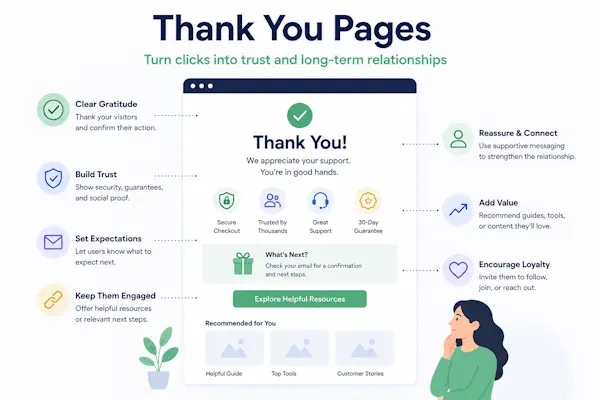
- Prioritize confirmation: Always start with a clear, direct headline that reassures the user their action was successful and outlines exactly what happens next.
- Bridge, don’t hijack: Present affiliate offers as a logical next step that complements the user’s original request, rather than a jarring, unrelated upsell.
- Maintain transparency: Build trust by clearly disclosing affiliate links and providing honest, personal context for why you recommend a specific tool.
- Keep it focused: Avoid clutter by sticking to one primary offer and a simple, clean design that guides the user toward a single, meaningful outcome.
Start with a clear confirmation and one next step
The first thing people want is reassurance. They need to know their action worked.
That means your headline should serve as a clear purchase confirmation or delivery confirmation. Phrases like “You’re in,” “Your guide is on the way,” or “Your webinar seat is confirmed” provide immediate peace of mind. Plain language wins here, as it validates the user’s decision to engage with your brand.
Right under that, outline the next steps before the user even has to ask. Tell them what to expect, where to look, and how long the process will take. If the lead magnet is instant, give them access directly on the page. If the gated content arrives by email, explain that clearly and advise them to check their spam or promotions folders if they do not see it. Providing these clear instructions from the start is an essential part of building long-term brand loyalty.
A lot of strong thank you page examples follow that same pattern.
They do not make the visitor guess what happens next.
A solid top section usually includes:
- A short confirmation headline
- A sentence confirming the delivery of the requested item
- A note on timing and where to find the file
- A simple directive, such as completing a newsletter signup or taking specific onboarding steps
Confirmation first, promotion second. Flip that order and the page feels like a bait and switch.
This is also the place to reduce friction. If you:
– promised a checklist, do not make people hunt for it
– promised a webinar reminder, specify when that email will arrive.
– are moving them onto a list, clarify what kind of content they will receive.
A good thank you page feels like a helpful front desk. It gives directions and ensures the user feels supported, rather than starting a sales pitch the second they arrive.
Place the affiliate offer like a next step, not a hijack
Once the confirmation is clear, you can recommend a product or tool as one of your primary upsell opportunities. The rule is simple: the offer must match the action the user already took.
If someone opted in for traffic tips, a traffic tool makes sense.
Or, if they joined for a landing page checklist, a page builder or tracking tool fits.
If the offer feels random, your conversion goal will suffer because trust drops first. To ensure the bridge between your content and the offer is seamless, many marketers use professional landing page templates designed specifically for conversion rate optimization.
Keep the pitch short. You do not need a full sales letter; you need a bridge.
Something like this works well: “While you are waiting for the email, here is the tool I use to build pages and track clicks.” That is enough to set the context. Then, add one or two benefits that matter to the user right now.
Use one primary offer.
Do not use three. Do not provide a wall of buttons. A thank you page is not a flea market.
This is also where transparency matters. Put the disclosure near the recommendation rather than burying it in the footer. A clean line works:
“This page includes an affiliate link. If you buy through it, I may earn a commission at no extra cost to you.”
That sentence does two things. It keeps you honest, and it helps the recommendation feel less slippery.
Your call to action should sound calm and useful. Good examples include:
- “See the tool I use”
- “Watch the quick demo”
- “Get the same setup”
What usually hurts performance? Hype, fake urgency, and vague buttons. “Act now!!!” is noise. “Learn more” is too weak. Make sure your call to action clearly describes what happens after the click.
If you are offering a bonus, explain it in one short block. Say what the bonus is, who gets it, and how it is delivered. If a receipt is required, state where to send it. If the bonus arrives automatically, specify when. Unbounce’s thank you page examples are useful if you want to see how post-conversion pages keep momentum without turning messy.
Add trust elements, bonus delivery, and the email handoff
A smart affiliate thank you page does more than just confirm an action; it removes the doubts that stop people from engaging further. By incorporating strong social proof, such as testimonials or real user results, you validate your recommendation and build immediate credibility.
Remember to keep your tone honest, as saying “I use this for my own projects” is far more effective than making exaggerated income claims.
This page is also the perfect place to initiate your email marketing automation. Clearly explain what happens next by letting subscribers know when to expect your first email. Being transparent about your follow-up content, which may include helpful tips and additional tool recommendations, sets the right expectations.
This post-conversion strategy is vital for increasing your long-term customer lifetime value because it nurtures the relationship rather than ending the interaction at the sale.
Furthermore, ensure your layout follows mobile optimization best practices so it remains clean and easy to navigate on smaller screens. If you want to increase your reach, adding social sharing buttons can encourage new subscribers to spread the word about your content.
This organized layout keeps your affiliate thank you page focused and professional:
| Page area | What to include | Example |
|---|---|---|
| Top section | Confirmation and delivery note | “You are in. Your guide is on the way.” |
| Next action | Simple instruction or button | “Check your inbox now.” |
| Offer block | Relevant tool, disclosure, and reason | “I use this for site tracking. I may earn a commission if you buy.” |
| Bonus note | Bonus details and referral incentives | “Reply with your receipt to claim your template pack.” |
| Trust strip | Social proof, photo, and support info | “Questions? Reply to any email I send.” |
| Footer | Email expectations and social sharing | “You will get tips and occasional offers.” |
The takeaway is simple: keep your page narrow, clear, and focused on providing value.
If you are currently setting up your system, this beginner affiliate marketing course can help you connect your affiliate registration form, your follow-up sequence, and your core offers. If you need a reliable stack for building high-converting pages and tracking, these LeadsLeap marketing platform tools are an excellent choice for any affiliate manager looking to scale.
Frequently Asked Questions
Why is it important to confirm the user’s action before showing an affiliate offer?
Confirming the action first provides the reassurance the user needs to feel secure in their engagement with your brand. If you immediately launch into a sales pitch, the page can feel like a deceptive ‘bait and switch,’ which damages trust and lowers your long-term conversion potential.
How many affiliate offers should I include on a single thank you page?
You should stick to one primary, highly relevant offer to keep the user focused and avoid overwhelming them. A thank you page is not a marketplace, and adding too many options usually leads to decision fatigue and decreased conversion rates.
Is it necessary to disclose affiliate links on the thank you page?
Yes, transparency is vital for building a sustainable relationship with your audience. Placing a clear, concise disclosure near your recommendation keeps you honest and helps the affiliate link feel like a helpful resource rather than a hidden commission grab.
What is the best way to handle bonus delivery on a thank you page?
Clearly state what the bonus is, who is eligible to receive it, and the specific delivery method or timeframe. If the bonus requires a receipt, provide simple, step-by-step instructions so the user knows exactly where to send their information.
Final Thoughts
The best affiliate thank you pages do not try to do everything at once. They confirm the action, provide clear direction, and present one relevant next step. By strategically placing this offer, you complete your conversion funnel while maintaining a professional tone.
If the page feels honest, people will stay with you longer, which is essential for long-term customer retention. Remember that user engagement serves as the ultimate metric for success, proving that your audience values the path you have provided. If your page feels like a trap, visitors will simply bounce.
Build your affiliate thank you page around clarity first. When you prioritize the user experience, the conversions usually follow.

Click Image To Find Out More

