 Malcolm Keith 2026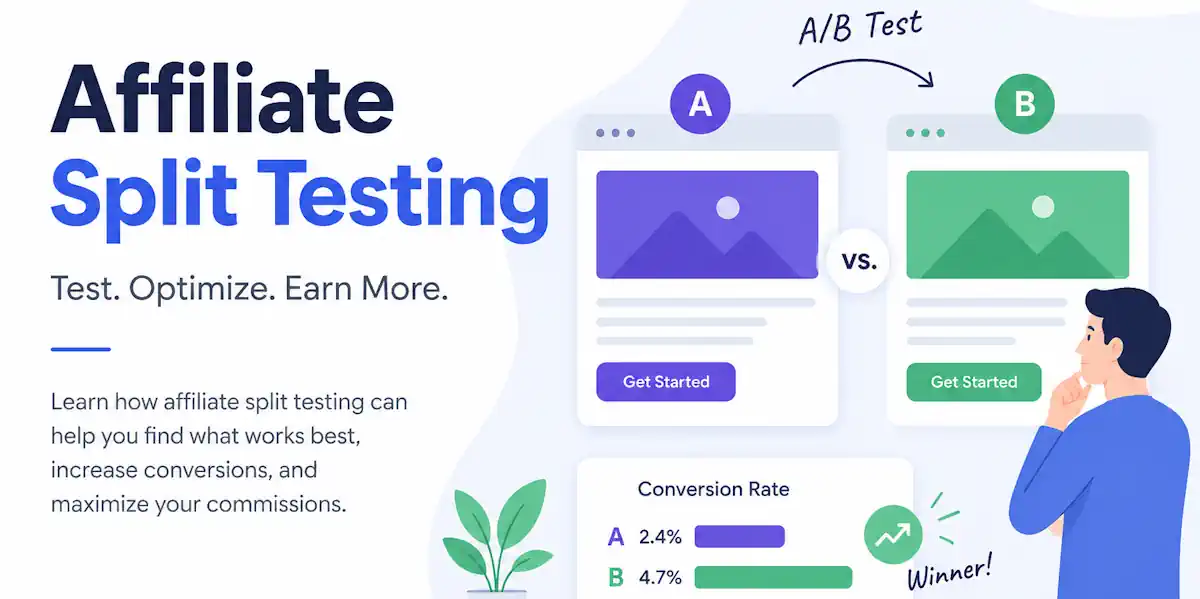

One small change can beat a bigger budget. That is the good news about affiliate split testing.
If you are working with low traffic and a tight wallet, you do not need fancy software or a stack of paid tools. You just need one clear test, simple tracking, and enough patience to let the result mean something. Whether you call it affiliate split testing or A/B testing, the goal remains the same: identify what works without breaking the bank.
Done right, small tests can save money, clean up your page, and show you where your next commission is hiding.
The trick is keeping it simple from the start.
Key Takeaways For Affiliate Split Testing
- Test one variable at a time: To ensure your data is accurate, only change one element—such as a headline or button color—so you can clearly identify what caused a change in performance.
- Prioritize click data: When traffic is limited, focus on tracking clicks and engagement rather than sales, as click data accumulates faster and provides quicker feedback for optimization.
- Focus on statistical significance: Avoid calling a winner too early; wait until both versions have received at least 50 to 100 visits to ensure your results are based on a reliable sample size rather than random chance.
- Keep clear records: Maintain a simple spreadsheet to track your tests, noting exactly what was changed and the conditions of the traffic to prevent guessing later on.
What split testing looks like when you’re still starting out
Split testing, often referred to as A/B testing, is simply a controlled comparison. You show Version A to some people, Version B to others, and then measure which version results in a higher conversion rate.
That is it.
For affiliate marketers, that could mean testing two headlines on your landing pages, two button phrases, two variations for your email marketing campaigns, or two opening hooks on a review post. The goal is not to look busy. The goal is to stop guessing and start making data-driven decisions.
Think of it like turning one knob on a radio. If you twist five knobs at once, you will not know what fixed the static. Testing works the same way.
Small-budget marketers get into trouble when they test too much at once. They swap the headline, the button color, the traffic source, and the offer, then try to decide what caused the jump. You cannot. All you know is something changed.
If you change three things at once, you did not run a test. You rolled dice.
That is why clean structure matters before you test anything. If your pages, traffic, and follow-up feel scattered, fix that first. This breakdown on why structure matters in affiliate marketing makes the point well: simple systems are easier to improve because you can see what each part is doing.
A tight budget also pushes you toward better habits. You do not have room for ten random experiments. You need one honest question, like: “Will this headline get more clicks than the current one?” That kind of question leads to usable answers.
If you are piecing things together with low-cost methods, these cost-effective affiliate marketing ideas fit the same mindset. Keep the setup light, keep the message clear, and make changes on purpose.
What to test first when money and traffic are limited
Your first tests should sit close to the click. Sales data takes longer to accumulate, but click data shows up much faster.
That means beginners usually get the best early wins from performing optimization on a headline, call-to-action, image choice, button text, or the angle of a short bridge page. These are low-cost changes that do not require a massive amount of traffic before you spot a pattern. Over time, these small adjustments can lead to a significant improvement in your overall conversion rate.
Simple visual or wording changes are often the best place to begin.
This quick table shows where a small-budget beginner should start.
| What to test | Cost | What to track | Why it works for beginners |
|---|---|---|---|
| Headline on a bridge page | Free | Click-through rate | Fast to change and easy to compare |
| Button text for affiliate links | Free | Link clicks | Good for low traffic |
| Email subject line | Free or low-cost | Open rate, clicks | Useful if you already have a small list |
| Intro paragraph on a review post | Free | Time on page, clicks | Helps sharpen your message |
| Two landing pages for one offer | Low-cost | Opt-ins or clicks | Best when the pages are mostly identical |
Start with the test that gives you the fastest clean signal. In most cases, that signal is provided by clicks.
You also do not need a premium tracking stack on day one. A basic page builder, a link rotator, or simple page-level stats can go a long way. If you want low-cost tools that cover several basics in one place, this LeadsLeap review for new affiliate marketers gives you an idea of the kind of setup many beginners use.
The main thing is keeping your records straight.
Know how many people saw Version A, how many saw Version B, and what action you want them to take next.

A simple affiliate split test you can run this week
Let’s make this real.
Say you’re promoting a beginner-friendly training offer with a short review page. You want more people to click from that page to the affiliate offer. Your traffic is small, maybe some blog visitors, a few social posts, and a tiny paid campaign at $5 a day.
Here is a clean first test:
- Create two versions of the same page.
- Change only the headline.
- Keep the offer, button, image, and traffic source the same.
- Use a traffic split to send visitors evenly to both versions.
- Track page visits and affiliate link clicks.
- Wait until each page gets enough visits to compare fairly.
Example headline A: “Start Affiliate Marketing Without Paid Ads”
Example headline B: “How Beginners Can Get Their First Affiliate Commissions”
Everything else stays put.
If you’re sending paid traffic, don’t run one page on Monday and the other on Thursday. Conditions change. Rotate them at the same time if you can. If you’re using free traffic, alternate links as evenly as possible and keep the audience similar.
This is also why simple offers are easier to test than messy ones.
Using Choice Pages is a great way to maintain a streamlined layout, which makes testing your affiliate links much easier than managing a cluttered funnel full of distractions. If your setup still feels cluttered, a straightforward system like the simple commission formula for beginners is much easier to test than a tangled funnel.
Keep a plain spreadsheet with columns for the date, page version, visits, clicks, and notes. To get even more granular data, use SubIDs or tracking IDs provided by your affiliate network to see exactly which version leads to a conversion.
Don’t write a novel in the notes section. Write things like “changed headline only” or “traffic from Facebook post” or “paid ad paused for one day.” Later, when you look back, those little notes save you from guessing.
How to avoid false winners when traffic is small
This is where beginners get burned.
The control version gets one sale. The variation gets none. It feels like a landslide. But if both pages only had 12 visitors, that result is smoke, not proof.
Small traffic can produce weird streaks. One extra click, one random buyer, or one day of better timing can make a weak page look like a champion. When you lack statistical significance, these outcomes are often just noise.
A safer beginner rule is to ensure your sample size reaches at least 50 to 100 visits per version before making a call. For opt-in tests, wait until both versions have a decent number of visitors and several conversions. Sales tests need even more patience, as sales happen less often. When evaluating your affiliate links, keep an eye on your earnings per click as a metric to gauge which version provides a better conversion rate and higher revenue.
Here is table showing a simple way to think about it:
| What you’re measuring | Too early to judge | Better point to review |
|---|---|---|
| Link clicks | Fewer than 50 visits per version | 50 to 100 visits per version |
| Opt-ins | Only a handful of leads total | Enough traffic to produce several leads on both sides |
| Sales | One page has 1 sale, the other has 0 | More clicks and lead data support the same trend |
If the numbers are close, do not force a winner. Keep the current page, or test a more significant difference next time.
That is another common mistake. If the two versions are almost the same, people often expect a clear result. A headline tweak can work, but sometimes your pages are so similar that the traffic barely notices. No strong signal does not always mean the test failed. It can simply mean the change was too small to impact your overall conversion rate.
If you want to see how other marketers think through testing different affiliate programs, this discussion on comparing affiliate links shows the same core lesson: keep the surrounding conditions as equal as possible to ensure your data remains reliable.
A small-budget checklist that keeps you honest
Before you run any test, slow down and check the basics. Following a consistent process helps you make data-driven decisions rather than relying on gut feelings.
- Pick one page, one offer, and one variable.
- Decide the single action you want more people to take.
- Send similar traffic to both versions.
- Monitor your marketing metrics for visits and clicks before you worry about sales.
- Write down what changed so you do not forget later.
- Do not edit the page mid-test unless something is broken.
- Wait for enough data before calling a winner.
- Save the result, even if the test was a dud.
That last point matters more than most people think.
A boring result still helps. It tells you what did not move the needle, which is a vital part of ongoing experimentation. Over time, this keeps you from repeating weak ideas and wasting money on changes that feel smart but do not perform.
Disciplined testing and constant optimization are how small marketers punch above their budget. Not with volume. With clarity.
Frequently Asked Questions About Affiliate Split Testing
Do I need expensive software to start split testing?
No, you do not need a large budget or complex tools to begin. Most beginners can get started with free page builders, basic link rotators, and a simple spreadsheet to track results.
How many changes should I make during affiliate split testing?
Always limit yourself to changing only one single element at a time, such as a headline or a call-to-action button. If you change multiple variables simultaneously, you will not be able to determine which specific change actually drove the improvement.
What should I do if my test results are too close to call?
If the performance between the two versions is nearly identical, do not force a winner. It often means the change was too subtle to impact user behavior, so you should either keep your current page or test a more significant variation next time.
Why is my small amount of traffic making testing difficult?
With low traffic, you are more likely to encounter statistical noise where a few random clicks can make one version look better than it actually is. You must be patient and wait until you have gathered a sufficient number of visitors to ensure your data represents a genuine trend.
Conclusion On Affiliate Split Testing
Small-budget affiliate split testing works when you treat it like a simple experiment rather than a casino spin. By focusing on one variable, one metric, and one fair comparison, you can steadily increase your long-term revenue. Whether you are participating in the Amazon affiliate program, working in iGaming, or focusing on any niche requiring high registrations, effective link management remains vital for tracking your progress.
You do not need massive traffic to learn something useful.
You simply need clean pages, basic tracking, and the patience to avoid a false winner.
While this guide focuses on testing one variable at a time, remember that advanced users eventually move to multivariate testing as their traffic grows.
Pick one page this week, change one element, and let the results guide your data-driven decisions to improve your landing pages.
Through consistent A/B testing, the results from doing affiliate split testing will speak for itself before you decide to move on to the next experiment.
Affiliate Split Testing Inside Home Business Academy Funnels

