
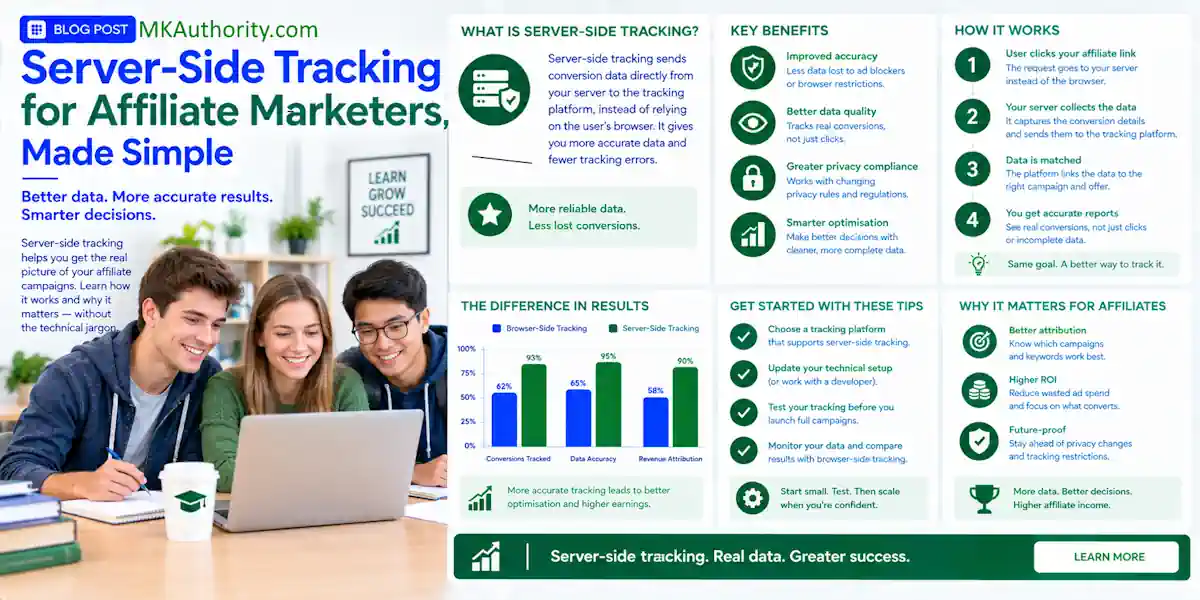
Server-Side Tracking for Affiliate Marketers, Made Simple

Paid traffic gets expensive fast when incomplete conversion tracking leaves your reports telling only half the story. You might see clicks in one dashboard, leads in another, and sales somewhere else, but you still don't know which ad put money in your pocket. Server-side tracking gives you a stronger way to use attribution data, connecting an approved sale back to the original click. Server-side tracking is a data collection method where user interactions on a website or app are sent first to a dedicated cloud server…

Continue ReadingServer-Side Tracking for Affiliate Marketers, Made Simple

UTM Naming Rules for Cleaner Affiliate Campaign Data

Affiliate traffic gets expensive fast when every click lands in one messy bucket. If you can't tell which ad, email, video, or placement brought the lead, you're not really tracking, you're guessing. Good UTM naming rules give you a clean trail from the traffic source to your landing page. UTM naming rules (or convention) is a standardized system of rules used by a team to write and structure UTM parameters added to website URLs. These rules keep data clean and accurate in analytics tools like Google…

Continue ReadingUTM Naming Rules for Cleaner Affiliate Campaign Data

Affiliate Data Privacy Rules for Small Websites

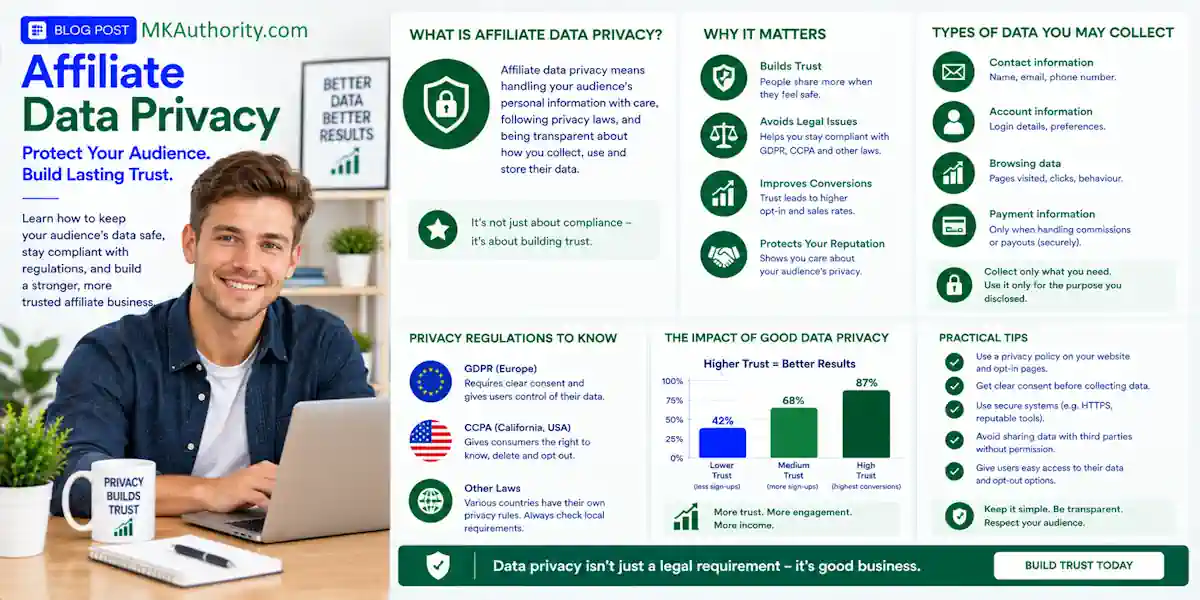
A single affiliate link can trigger more data collection than most beginners realize. Affiliate data privacy covers click IDs, cookies, analytics tags, pixels, redirects, email signups, conversion reports, and usage data connected to that link. That doesn't mean you should stop tracking. It means tracking with your eyes open, keeping data lean, and explaining what happens before a browser starts doing the work. This guide covers practical privacy best practices and legal requirements, which vary by jurisdiction, without turning your small website into a legal maze.…

Continue ReadingAffiliate Data Privacy Rules for Small Websites