
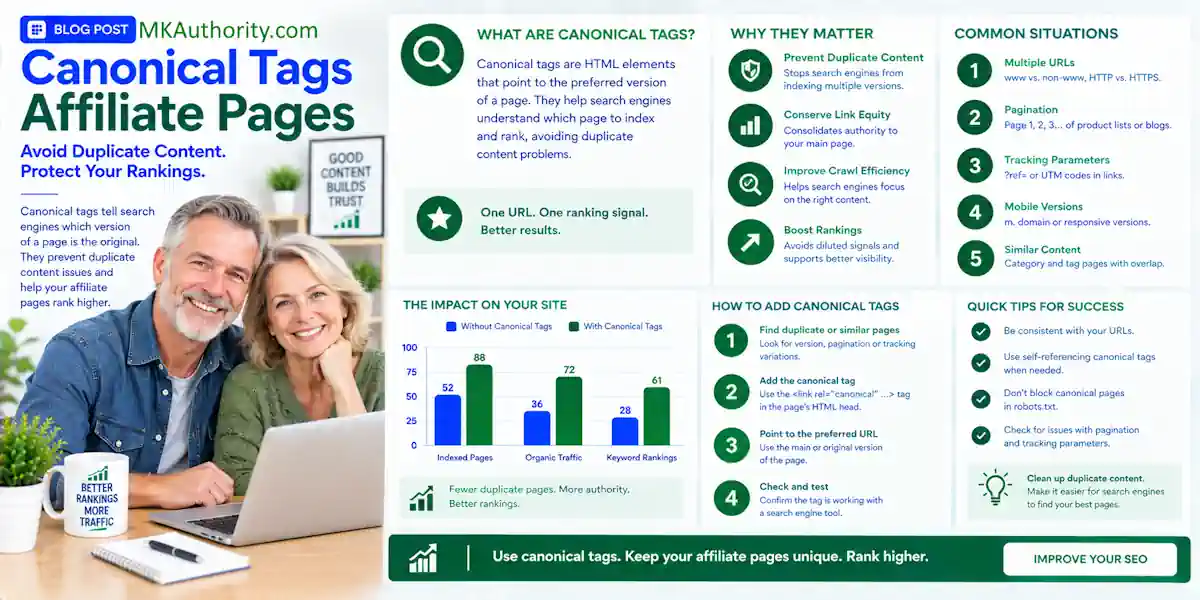
Canonical Tags for Affiliate Product Pages, Made Simple

A canonical tag signals to search engines which URL is the main version. If you searched for canonical tags affiliate pages, you probably want one simple answer: point Google to the clean canonical url, the preferred version of the affiliate article, rather than a tracking URL. A good affiliate page can lose focus fast when the same review appears under several URLs. One link may have utm tags from a campaign, but that tracking detail shouldn't change the page's home. This is a signal, not a…
Continue ReadingCanonical Tags for Affiliate Product Pages, Made Simple

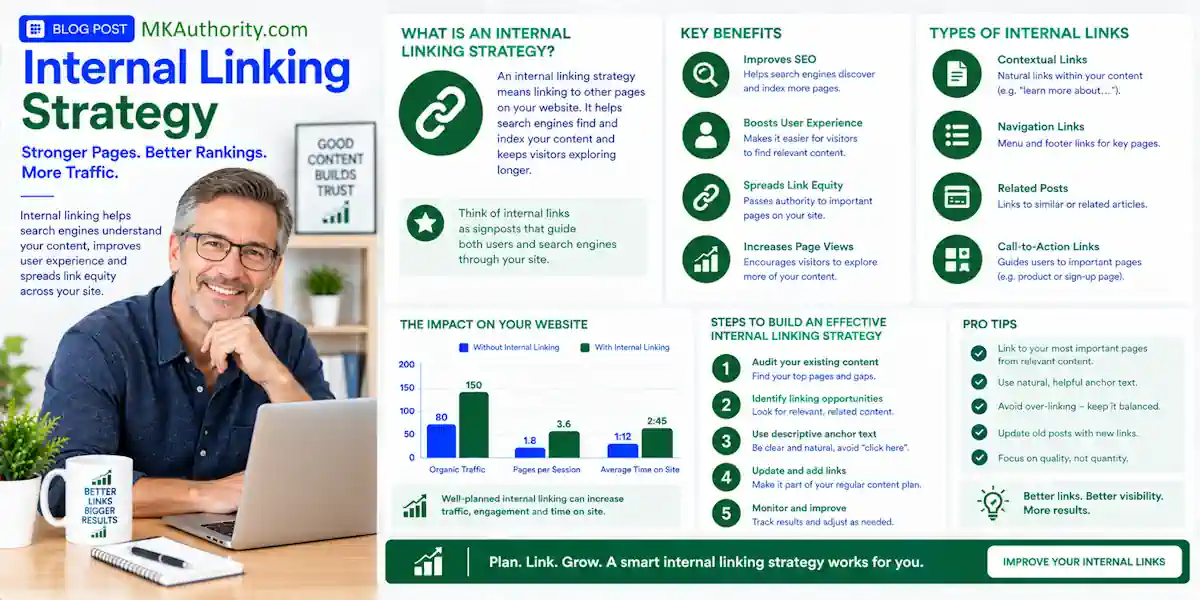
Internal Linking Strategy for Affiliate Sites That Need Traffic

More affiliate content doesn't automatically mean more affiliate traffic. If your best review, comparison, or buyer guide is buried three layers deep, it can sit there for months without getting the attention it deserves. A solid internal linking strategy is a practical search engine optimization tactic within a broader SEO strategy. It clarifies your site architecture for readers and search engines. You are not trying to push people around your site. You are helping them move from a beginner question to a confident buying decision. Here…

Continue ReadingInternal Linking Strategy for Affiliate Sites That Need Traffic

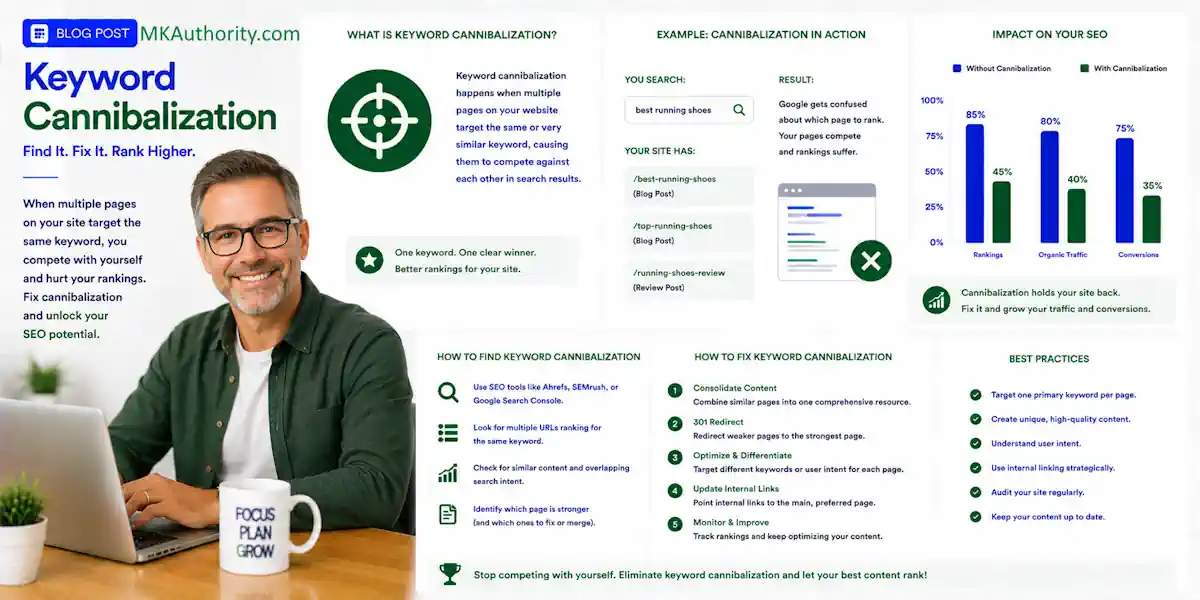
Fix Keyword Cannibalization on Affiliate Websites Without Losing Traffic

An affiliate site can gain more organic traffic, attract more clicks, and still make less money. That happens when several pages chase the same visitor with nearly the same answer, weakening SEO performance. Keyword cannibalization is often the reason. In simple terms, keyword cannibalization happens when multiple pages on your website target the same keyword and search intent, causing them to compete against each other in search engine results. You may have two product reviews, three "best tools" posts, and an old comparison page - all…

Continue ReadingFix Keyword Cannibalization on Affiliate Websites Without Losing Traffic