 Malcolm Keith 2026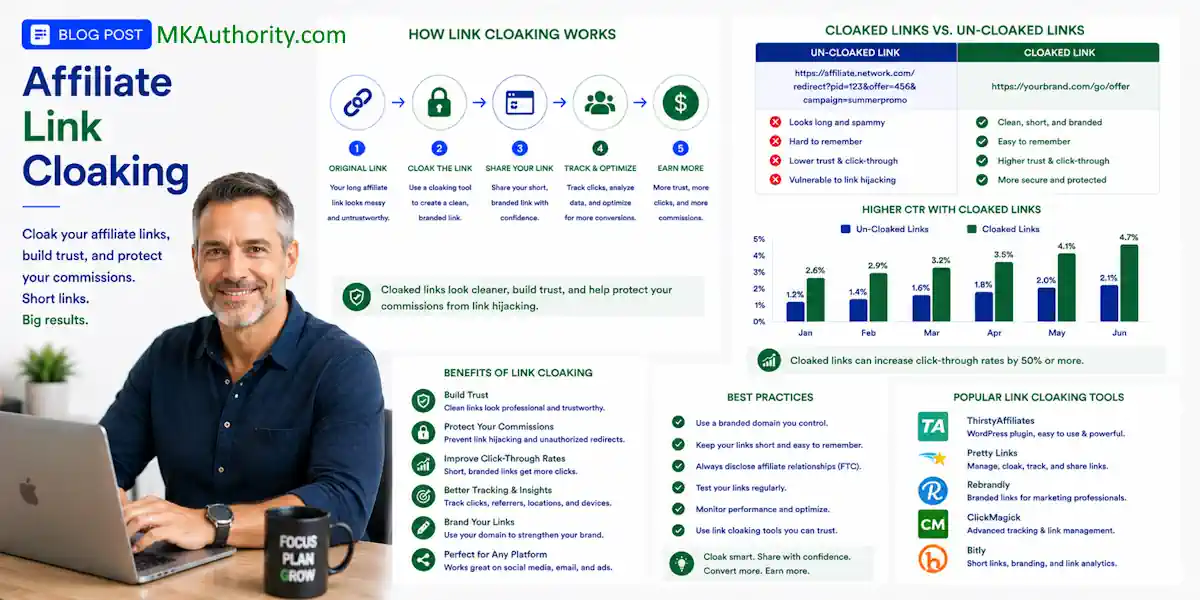

I use affiliate link cloaking a lot on this website. A long, messy URL can look like a pile of wires hanging behind a TV when you are trying to build a successful affiliate marketing business. That is why affiliate link cloaking is attractive to beginners and pros alike.
You can turn those complicated tracking addresses into pretty links that are clean, memorable, and easier to manage.
But a prettier affiliate link does not remove the rules behind it.
Affiliate link cloaking can be useful.
It can also get you rejected from a program, lose commissions, or create trust problems if you use your affiliate links the wrong way.
Let’s keep it simple and clear.
Key Takeaways
- Understand Cloaking Basics: Affiliate link cloaking turns long, messy tracking URLs into clean, memorable branded links using 301 redirects, improving link management and control.
- Check Merchant Rules First: Always review specific affiliate program terms and network guidelines before cloaking or altering any links, as some merchants strictly prohibit link masking.
- Prioritize Honest Disclosures: Link cloaking does not replace transparency; you must always disclose your commercial relationship clearly in plain language before readers click.
- Avoid Deceptive Destinations: Ensuring your cloaked links lead to accurate, expected landing pages protects your audience trust, preserves click-through rates, and prevents commission loss.
What Affiliate Link Cloaking Actually Does
Affiliate link cloaking, sometimes referred to as link masking, means placing a branded or shortened URL in front of your original affiliate tracking URL.
For example, instead of sharing a link full of numbers, parameters, and network codes, you might use:
yourdomain.com/recommends/email-tool
When a visitor clicks it, url redirection via a 301 redirect sends them to the merchant page through your tracking links.
In my case I use Pretty Links in WordPress to pass a link on (this one is an affiliate link to one of my opportunity capture pages)
https://www.mkauthority.com/turnkey
This can make affiliate links easier to remember. It also gives you more control if a program changes its destination url. Rather than hunting through 30 old blog posts, emails, and pages, you update the final link in one place, making it a core part of effective link management.
That part is cool. But don’t confuse link masking with a loophole.
Affiliate link cloaking does not hide the fact that you may earn a commission.
It does not give you permission to ignore a merchant’s rules.
It does not make misleading ads okay.
And it does not protect you if your page makes claims you cannot prove.
There is also an important difference between a normal redirect and search-engine cloaking. A normal redirect sends every visitor to the same intended page, while search-engine cloaking means showing one thing to search engines and something different to real visitors. That is a completely different issue, and it can create serious search visibility problems.
Think of a cloaked affiliate link as an address label on a package.
The label can be clean and helpful.
It cannot lie about what is inside the box.
Affiliate Link Cloaking Rules You Need to Check First

Before you cloak any affiliate links, read the rules for the affiliate program and the individual merchant program. Do not assume every offer allows the same setup.
Some programs allow branded redirects. Others require you to use their original tracking URL without changing it. A few are strict about link shortening, redirects, paid ads, email use, social posts, or where your links can appear. For example, strict networks like Amazon Associates have very specific guidelines about how you use affiliate links across different channels.
Check these areas before promoting an offer:
- Read the program’s terms for wording such as “redirects,” “masking,” “shortened links,” “special links,” or “link modification.”
- Check whether the merchant allows direct linking from ads, email, social media, YouTube descriptions, or bridge pages.
- Find out if the program bans bidding on its brand name or using its name in a display URL.
- Confirm that your redirect preserves the tracking parameters and ensures your affiliate id passes correctly to the destination page.
- Keep a copy of the rules when you join, then re-check them before a major campaign.
Rules vary by each affiliate program, advertising platform, and jurisdiction. This is practical information, not legal advice. When money, ads, or a major promotion is involved, verify the current terms yourself.
The Federal Trade Commission’s Endorsement Guides focus on material connections. In plain English, if you may earn money when somebody buys through your recommendation, readers should know that before they click. A clear explanation of disclosure placement and rel="sponsored" is covered in this affiliate disclosure and sponsored-link guide.
Google also expects paid or commercial links to be properly qualified. For affiliate links, the sponsored attribute is usually the appropriate choice, though some site owners still fall back on the nofollow attribute, which does not replace a clear disclosure for human visitors.
A hidden disclosure is not a disclosure. If a visitor can miss it before clicking, it is in the wrong place.
The Biggest Risks of Cloaked Affiliate Links
The first risk is simple: lost commissions. If your redirect breaks, strips a parameter, loops, or sends people to the wrong page, the visitor may still buy. You just might not get credited, and in worst-case scenarios, broken tracking can even expose you to commission theft from malicious actors.
The second risk is a program suspension. A merchant can remove you for using prohibited redirects, unauthorized ad copy, trademark terms, or misleading links. Being a good affiliate doesn’t mean only getting clicks. It means following the rules when nobody is watching.
Then there is the trust issue.
If your link says “best-email-tool” but sends someone to a crypto offer, a high-ticket business opportunity, or a completely unrelated sales page, people will feel tricked. When link masking is used to hide the true destination in affiliate marketing, it often damages long-term audience trust and lowers click-through rates.
That can lead to refunds, complaints, unsubscribes, and a reputation you do not want.
Affiliate link cloaking also cannot cover up a weak offer.
A polished short URL does not make a poor product better. It does not make a wild income claim believable. And it will not repair a sales page that confuses people.
A good bridge page should add context, not hide problems. Keep the headline aligned with the ad, describe what the visitor will see on the landing page, and give them a real reason to continue. If you use a button, do not disguise an affiliate promotion as a free download or private login.
Another risk comes from spam filters and ad platforms. Too many redirects, unfamiliar domains, aggressive popups, and unclear tracking methods can make a campaign look suspicious. Keep the path short. One branded redirect is easier to understand than a chain of four tracking links bouncing visitors around the web.
Put Your Affiliate Disclosure Where People Can See It
A disclosure page in your footer is not enough by itself. It is fine to have one, but readers need clear information where the actual recommendation appears as part of your broader affiliate marketing efforts.
Use plain language. You do not need legal-sounding paragraphs that nobody understands.
Here is a simple example:
“Some links below are affiliate links. If you buy through them, I may earn a commission at no extra cost to you.”
Place that message near the top of a review, on the same landing page as the links, and close to important buttons or product recommendations. If you mention several offers in a comparison table, include a clear disclosure before the table.
On social media, do not bury the disclosure after a “more” cut-off. For video, say it out loud and show it on-screen. For email, put it near the recommendation instead of hoping readers will remember a disclosure from three messages ago, especially when promoting a specific affiliate program.
A useful affiliate disclosure overview makes the same point: readers should not need to hunt for the commercial relationship when engaging with affiliate links. Cloaking a URL changes the appearance of the link. It does not change your disclosure responsibility in affiliate marketing.
A Safer Affiliate Link Cloaking Setup
Start with your own custom domain, not a random free shortener you may lose later. A simple custom domain setup paired with popular wordpress plugins like pretty links or thirstyaffiliates can create branded links without making things complicated. You can also use thirstyaffiliates or similar tools to manage your redirects smoothly.
Keep your structure organized. For example:
yourdomain.com/go/tool-namefor an affiliate recommendationyourdomain.com/go/course-namefor a training offeryourdomain.com/go/traffic-sourcefor a traffic platform
Avoid vague slugs like /go/offer123 when a more descriptive name works. You do not need to reveal every detail, but the link should not feel deceptive. Clean 301 redirect setups help preserve trust and maintain strong click-through rates among your readers.
Test every link on desktop and mobile before you publish it.

Click it in a private browser window. Check that the destination url reaches the correct page and that your affiliate id passes through properly.
Check that the merchant site loads properly, and review click-through rates to see how users interact. Then confirm your affiliate dashboard, tracker, or click analytics records the click accurately.
This matters even more with paid traffic. You may pay for hundreds of clicks before realizing a redirect is broken. A good tracker helps you see which campaign, ad, keyword, email, or landing page created the click.
Advanced click analytics and these affiliate link tracking tools can help you compare traffic data without guessing.
Do not treat a reported sale as money in the bank either. Track clicks, leads, sales, refunds, reversals, and cleared payouts separately.
A campaign can look profitable at first, then fall apart after refunds and tool costs. Use this rough formula before buying traffic:
Expected commission per click = sales conversion rate x commission per sale x (1 – refund and reversal reserve)
If an offer pays $35, converts at 2%, and you reserve 20% for refunds, your expected value is $0.56 per click. Paying $1.20 per click is not a business model. It is a fast way to burn a budget.
Frequently Asked Questions
What is affiliate link cloaking?
Affiliate link cloaking is the practice of placing a clean, branded URL in front of your original affiliate tracking link. When users click the shortened URL, a redirect sends them to the merchant’s destination page through your tracking parameters.
Does link cloaking hide the fact that I earn a commission?
No, link cloaking only changes the visual appearance of the URL. It does not hide your commercial relationship, and you are still legally and ethically required to provide a clear affiliate disclosure.
Can link cloaking get me banned from affiliate programs?
It can if you use prohibited redirects, mask links against a merchant’s specific terms of service, or use deceptive slugs that mislead users about the final destination. Always check each program’s rules before applying link masking.
Why are broken redirects dangerous for affiliate marketers?
If a cloaked link breaks or strips tracking parameters, visitors may still purchase the product, but you will not receive your commission. Regularly testing your redirects on both desktop and mobile is essential to protect your earnings.
Keep Cloaking Honest and Useful
Affiliate link cloaking is a tool, not a magic button. Used properly, it can make your links cleaner, easier to track, and simpler to update, especially when you use reliable WordPress plugins to handle the redirection.
The safe path is straightforward: follow the program terms, match your branded links to the final destination url, disclose the affiliate relationship in plain language, and test your tracking before spending money. This balance of link masking and transparent practices keeps you compliant with networks like Amazon Associates.
Your readers do not need perfect URLs or clever link shortening tricks. They need honest recommendations and a clear idea of what happens when they click, which builds the trust required for long-term success in affiliate marketing.