 Malcolm Keith 2026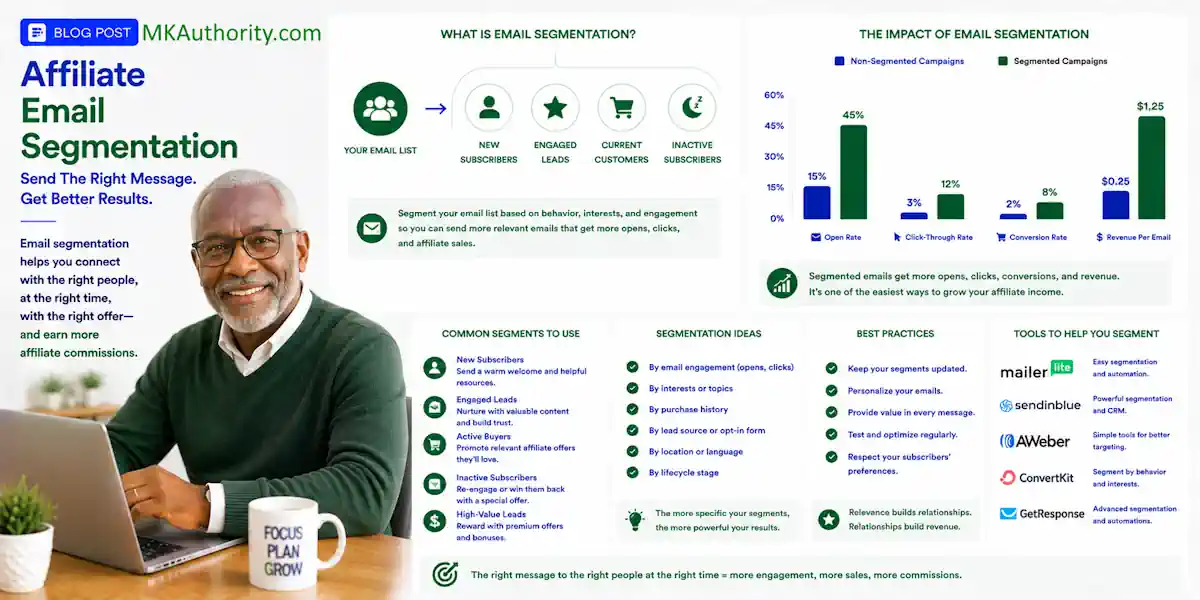

A click on your affiliate link can look exciting. But someone who clicks once isn’t the same as someone who visits landing pages, reads the product page, adds it to cart, and buys.That is where affiliate email segmentation starts making a real difference.

I you don’t know, affiliate email segmentation is the practice of dividing your email subscriber list into smaller, targeted groups based on specific characteristics. Then, instead of sending the same generic affiliate link to your entire audience, you deliver tailored offers that match what each specific group is already primed to buy
When doing affiliate email marketing, it helps you send follow-ups based on what people actually did, not on hope or a random mass email. The promise and topic shown in your opt-in forms also provide useful context for those follow-ups.
Why Affiliate Email Segmentation Matters for Affiliate Marketing
- Prevents List Fatigue: Sending irrelevant product links causes subscribers to unsubscribe or mark emails as spam.
- Boosts Conversion Rates: Niche-focused and highly segmented affiliate promotions can yield significantly higher conversion rates than broad newsletters.
- Improves Sender Reputation: Highly relevant emails get more clicks and fewer spam complaints, ensuring your emails actually hit the inbox.
Key Takeaways On Affiliate Email Segmentation
- Segment subscribers by real buyer-intent signals, such as repeated offer clicks, product-page visits, cart events, and confirmed purchases.
- Treat a click as interest, not proof of a sale; use reliable postbacks, webhooks, merchant integrations, or conversion imports before moving someone into a buyer segment.
- Build relevant email automations around each subscriber’s actions and signup context, while suppressing confirmed buyers, unsubscribes, bounces, complaints, and inactive contacts from regular promotions.
- Protect deliverability with useful content, clear affiliate disclosures, consent records, privacy controls, and compliance with platform rules and email laws.
- Measure success through confirmed purchases, cleared commissions, refunds, reversals, and profit rather than clicks or opens alone.
How Segmentation Follows Buyer Intent
Your email list isn’t one crowd. Behavioral segmentation groups subscribers by what they do instead of treating everyone alike. Some people are browsing, others are researching, and a few are ready to buy right now.
A click is interest, not proof of a sale
A click is like someone raising their hand in a crowded room. It tells you they noticed the offer, but it doesn’t tell you they pulled out their credit card.
High-intent clickers may click the same offer twice or revisit landing pages. They may read a product review, check pricing, or look for social proof. These actions suggest research, not a confirmed purchase.
They need help making a decision. Confirmed purchasers are different. They should only enter a buyer segment after a network postback, merchant integration, verified conversion import, or other reliable purchase event confirms the sale.
If you can’t confirm a purchase, keep that person in an unconverted prospect segment. Don’t guess. Good list hygiene matters because unreliable purchase data can trigger incorrect email automation.
Affiliate marketing is not a link dump
Affiliate marketing means you earn a commission for recommending another company’s product or service. An occasional, clearly disclosed recommendation inside your own training, review, or helpful newsletter is genuine email marketing, unlike building a list only to fire out offer after offer.
That distinction can matter with email service providers. Many will accept affiliate links in a real business email newsletter, yet may reject accounts built around nonstop third-party promotions. The platform’s current acceptable-use policy is what counts, not an old Facebook comment or a comparison chart.
Build Segments Around Real Actions
Good segmentation begins before the first promotion. At signup, use email list management to store the traffic source, topic, opt-in forms, selected lead magnets, and first action. These fields reveal the subscriber’s likely target audience context.
Someone who requested a traffic checklist may want different emails than someone who downloaded a funnel-builder guide. Source and topic tags can route each person into a relevant welcome series. A solid affiliate opt-in page helps your affiliate opt-in landing pages set that expectation right away.
Start with five practical intent groups
Use behavioral segmentation before adding demographic segmentation. For this purpose, clicks, visits, cart events, and purchases reveal more intent than unnecessary demographic fields.
You don’t need 40 confusing tags. Start with a few groups that tell you what the person is likely thinking.
A subscriber who engages with reviews or comparison material may need trust-building content, including social proof.
| Signal | Sample segment definition | What it means |
|---|---|---|
| Two offer clicks within seven days, no sale | Hot offer clicker | They are actively comparing the offer. |
| Product landing pages visited within 14 days, no outbound click | Warm researcher | They need more information or trust. |
| Add-to-cart event within 24 hours, no purchase | Cart prospect | They are close, but something stopped them. |
| Approved sale through a postback or API | Confirmed purchaser | They bought and should leave promo sequences. |
| No click or site visit for 60 days | Cooling subscriber | They need less mail or a re-engagement message. |
Track events, not only UTM links
UTMs can show which campaign brought the click. They don’t tell your email marketing system what should happen next.
Give each offer a clear internal tag, such as category_email_tools, offer_productname, and intent_hot. Then connect the opt-in page, bridge page, tracker, and email platform where possible. Include traffic sources and offer data in your affiliate marketing setup.
Track product-page visits with your own site events. Track offer clicks inside the email platform. Use a network postback, webhook, or conversion import for purchases when affiliate programs support them. Only create a cart abandonment segment when the merchant or network supplies a reliable cart event. Later, predictive analytics can optionally score intent after enough reliable event history exists.
Privacy settings, browser limits, consent choices, and network tracking rules can all affect the data you receive. Consistent tags, consent records, data storage, retention limits, and deletion practices support list hygiene.
A 90-day marketing automation and privacy plan can help you think through those controls before your tags become a mess.
Use Intent-Based Email Automations
Tags are nice. Intent-based email marketing is where the money starts.
Follow up with high-intent clickers quickly
Use behavioral segmentation instead of a generic broadcast. Trigger follow-up when subscribers click an offer twice, engage with a review, or visit product landing pages after an email. Use the originating opt-in forms as another routing condition when different forms promise different kinds of help.
Set up email sequences around a simple cadence. Send the first email within an hour, while interest is still warm.
Your first message might say: “Still comparing [Product Name]? Here are the three things I would check before joining.” Keep it useful. Explain who the product fits, who should skip it, and what problem it solves.
The next day, send an objection-handling email. Talk about price, setup time, support, refunds, or whatever people normally worry about. Use relevant social proof, such as customer evidence, only when it addresses that concern.
A third email can include a legitimate deadline, bonus, or case study as social proof. Make sure the proof matches the subscriber’s concern, and don’t invent urgency. Judge the sequence by qualified outcomes and conversion rates, not clicks alone.
Put a plain disclosure close to the first affiliate recommendation, such as: “I may earn a commission if you purchase through links in this email.” The FTC’s Endorsement Guides guidance says material connections need to be clear and easy to notice.
Treat confirmed buyers like customers
A confirmed purchaser should exit the original promotion immediately. Suppress them from the same offer, discount reminders, and “are you still interested?” emails. That’s basic list hygiene, and it keeps subscriber states accurate.
Send a simple thank-you message or useful next step if that fits your relationship with the buyer. Then wait. After seven to 14 days, you can offer helpful onboarding content or a related product that genuinely complements what they bought.
For example, someone who buys a landing-page tool might later want traffic tracking or email automation training. Someone who buys a traffic course probably doesn’t need another traffic course the next day.
A buyer who keeps receiving the same promotion doesn’t feel nurtured. They feel invisible.
Protect Your Sender Reputation Before It Slips
More emails do not automatically mean more commissions. A tired list hurts email deliverability, lowers opens and clicks, and can trigger spam filters.
Use the 80/20 rule and engagement recency
A simple working target is about 80 percent useful content and 20 percent direct promotion. That can mean four emails with tips, reviews, checklists, or honest lessons. Add customer social proof when it supports the topic, then follow with one offer that fits.
Use recency as a control switch. Subscribers who clicked last week can receive a short promotion sequence. Someone who hasn’t clicked, visited your site, or replied in 60 days shouldn’t receive every campaign.
Good list hygiene means suppressing unsubscribes, hard bounces, spam complaints, and inactive contacts from normal promotional sends. Also suppress confirmed purchasers from the campaign that sold the product. For inactive people, send one short re-engagement email, then stop promotional mail if they stay silent.
Clicks and site visits are usually stronger engagement signals than email opens. Open tracking can be less reliable because of privacy protections and image blocking.
Check platform rules and follow email laws
Before you build your system, ask the provider if your intended affiliate promotion is allowed. Compare custom tags, automations, webhooks, dynamic content, landing pages, suppression rules, and event history, not only the monthly price.
If you need help narrowing the options, these affiliate marketing autoresponders are a useful place to compare beginner-friendly tools.
Keep the disclosure and consent language from your opt-in forms with each subscriber record. Tracking, affiliate disclosures, and platform capabilities vary across countries, affiliate programs, networks, merchants, and account types.
In the United States, the FTC’s CAN-SPAM compliance guide covers email marketing requirements. They include honest subject lines, a working opt-out method, and honoring unsubscribe requests.
Test What Produces Cleared Commissions
A big click-through rate can feel awesome. Still, clicks don’t pay your bills. Cleared commissions do.
Your email marketing path runs from delivery and clicks through confirmed purchases and cleared commissions. Test the full path, not just the first visible result.
Test one decision at a time
Only test one decision at a time, starting with the threshold that creates your hot-clicker segment. This behavioral segmentation rule is itself a test. Does one click mean interest, or do two clicks within seven days predict buyers better?
You can also use A/B testing for the first email angle. One group gets a product comparison. Another gets a case study using social proof to show the problem the offer solves. Keep the offer and timing the same so you know what changed.
Watch the whole path: delivered emails, unique clicks, landing pages, opt-ins, confirmed purchases, refunds, reversals, and cleared commissions. Compare conversion rates from unique clicks and landing pages to confirmed purchases. If clicks look great but sales are weak, the offer, bridge page, or follow-up may not match the subscriber’s real need.
Know your payable value per click
Use this simple calculation before paying more for traffic. It should reflect your commission structure, including payout amount, recurring terms, reversals, and refunds:
Expected commission per click = purchase rate x commission per sale x (1 – refund and reversal reserve)
Say an offer pays $35 per sale. You expect a 2 percent purchase rate and hold back 20 percent for refunds or reversals. Your expected payable value is $0.56 per click.
That $0.56 is not a safe traffic bid. Your tracking software, page design, autoresponder, creative work, and other costs still come off the top. Use affiliate link tracking tools to compare clicks with the sales and commissions that actually clear.
Also measure customer lifetime value by segment. Track recurring commissions and later purchases from confirmed buyers over a fixed period. Once enough data accumulates, predictive analytics can help compare segment value. A small buyer segment can be worth more than a giant list of people who only click.
Frequently Asked Questions
What is affiliate email segmentation?
Affiliate email segmentation groups subscribers according to their interests, signup context, and actions. This lets you send follow-ups that match whether someone is researching, close to buying, already a customer, or becoming inactive.
Does clicking an affiliate link mean someone is ready to buy?
No. A click shows interest, but repeated clicks, product-page visits, comparison activity, or cart events provide stronger evidence of buying intent. Confirm a purchase with a reliable conversion event before treating someone as a buyer.
What segments should an affiliate email marketer start with?
Start with a hot offer clicker, warm researcher, cart prospect, confirmed purchaser, and cooling subscriber segment. These five groups cover the most useful intent stages without creating an overly complicated tagging system.
How should confirmed buyers be handled in email automations?
Remove confirmed buyers from the promotion that sold the product immediately. Send a thank-you or onboarding message instead, then offer related products only when they genuinely complement the original purchase.
How can segmentation improve affiliate email results?
Segmentation makes follow-ups more relevant and reduces repetitive promotions that can damage trust and deliverability. Measure the full path from clicks to confirmed purchases, cleared commissions, refunds, and profit to see which segments are truly valuable.
The Smart Follow-Up Is the Relevant One
Affiliate email segmentation isn’t about building a complicated dashboard that you never use. It’s about knowing whether a person is curious, close to buying, already a customer, or fading away.
Start with five simple intent tags, one useful automation, and firm suppression rules that support accurate list hygiene. For larger lists, predictive analytics can refine those signals later, but simple tags should come first. Then watch the numbers that matter most: cleared commissions, real buyers, and profit after costs.



