 Malcolm Keith 2026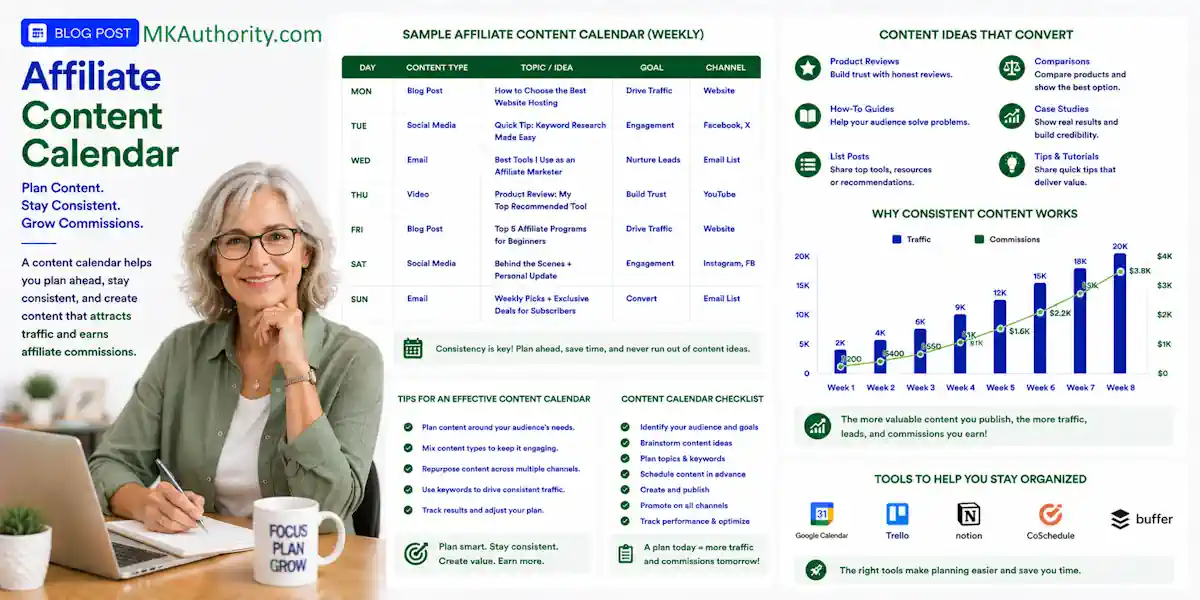

Publishing more posts does not automatically create more affiliate sales. You can work hard for weeks, then find your review reached people who only wanted a basic definition. An affiliate content calendar gives every post a job. It connects the question a reader is asking, the offer that can help, and the next step that makes sense.
A repeatable content creation process makes content marketing easier to organize. Use a simple content calendar template to plan each month without filling dates just to stay busy.
Affiliate marketing can become a steadier revenue stream when every post supports a clear buyer need. Build around intent, then improve the system each month.
Key Takeaways On Building An Affiliate Content Calendar
- Build your affiliate content calendar around buyer intent, not publishing volume. Use search language and search results to identify whether readers need education, comparison, or a decision-focused page.
- Give every keyword a funnel job and match the format, internal links, and CTA to that stage. Tutorials, comparisons, reviews, and offer pages should help readers take the next logical step.
- Use a reusable content calendar template that tracks content details, partner terms, affiliate links, disclosures, deadlines, and performance metrics. A simple four-week rhythm can keep planning, publishing, updates, and reporting manageable.
- Measure clicks, opt-ins, conversions, EPC, refunds, and cleared commissions, then refresh pages based on what the data shows. Useful content, honest recommendations, and accurate partner information build more dependable affiliate revenue than aggressive promotion.
Build Your Affiliate Content Calendar Around Buyer Intent
Buyer intent is the reason behind a search. Some people want a quick answer. Others are comparing options. A smaller group is ready to make a decision today.
That difference matters because a tutorial, a comparison, and a product review should not use the same message or CTA. Your editorial calendar should show where each content idea fits before content creation begins.
Read the language, not only search volume
Start with the actual words readers type. Their target keywords reveal where they are in the buying process. Let the intent label guide content creation.
Phrases such as “how to track affiliate clicks” or “why are my affiliate links not converting” show a problem that needs education.

Now look at phrases like “Voluum vs ClickMagick,” “best link tracker for paid traffic,” or “product name alternatives.” These people are further along. They are weighing tools, prices, features, and risks.
Search results also give you clues. If Google shows comparison posts, pricing pages, and reviews, the keyword likely has commercial intent. If it shows beginner guides and videos, readers may need more help before they are ready to buy.
When a page includes affiliate links, it should still be useful on its own. A quick primer on affiliate SEO and link attributes can help you avoid turning an informative page into a thin link page.
Put each keyword into an intent bucket
Keep the process simple. Give every keyword one main intent label before it enters your content backlog.
| Intent level | Common search signals | Content that fits | Best next step |
|---|---|---|---|
| Problem-aware | how to, why, fix, beginner | Tutorials and problem-solving guides | Read a related guide or join your list |
| Researching | best, top, ways to, tools | Roundups and educational buying guides | Compare options |
| Comparing | vs, alternatives, review, pricing | Comparisons, alternatives, and detailed reviews | View the recommended option |
| Ready to act | coupon, trial, buy, discount | Offer pages and time-sensitive updates | Visit the merchant page |
Don’t force every reader to jump straight to an affiliate link. A person looking for a solution needs clarity first. A person comparing two tools wants facts, proof, limits, and a clear recommendation.
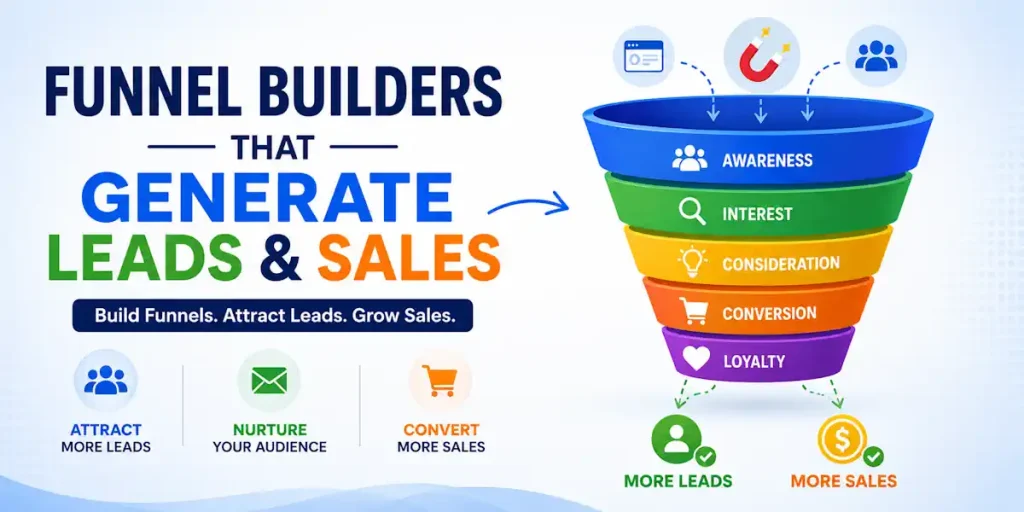
Give Each Keyword a Funnel Job
A good content strategy does not treat every post as a sales page. Content marketing lets readers move forward at their own speed, while your affiliate content calendar gives each keyword a clear funnel role.
Match content formats to the buying stage
Problem-solving guides and tutorials work well at the beginning. Show people how to solve one issue, then link to the tool or training that makes the process easier.
Comparison posts are great for the middle stage. Be fair. Explain who each option suits, what it costs, what is missing, and where beginners can get stuck. A one-sided comparison feels like a sales pitch fast.
Reviews and alternatives pages work closer to the decision point. Include the product’s main promise, pricing context, strengths, limitations, support, and any deal-breakers. Your call to action should match the page. “See current pricing” is better than a vague “Learn more.”
For example, a tutorial about tracking sales can link naturally to this affiliate conversion tracking guide. That gives the reader the next lesson without pushing an unrelated offer.
Prioritize topics that can produce useful results
Planning ahead with a focused shortlist is more useful than building a huge spreadsheet. Choose topics that make business sense.
Give each topic a score from 1 to 5 for buyer intent, audience fit, ranking opportunity, personal experience, and content creation effort. Then add affiliate marketing factors to the equation.
Verify the merchant, its brand partners, affiliate network rules, commission model, and offer conditions before scheduling the post:
- Look at the commission rate, cookie length, countries accepted, and any approval rules.
- Record whether the offer is recurring, one-time, or based on qualified leads.
- Note promotion dates, price changes, product launches, and seasonal campaigns.
- Read the terms so you don’t promote claims, bonuses, or coupons that are no longer valid.
A high commission is not always the better topic. A useful tool with a realistic payout, good audience match, and solid reputation can beat a shiny offer nobody trusts.
Turn Strategy Into a Monthly Affiliate Content Calendar
Your affiliate content calendar can live in Google Sheets, Notion, Trello, or project management software you’ll actually use. Fancy software is cool, but an editorial calendar only works when you keep its publishing schedule current. Consistency matters more than the platform.
Add fields built for content creation
Use a reusable content calendar template for every row, so you can resume content creation weeks later without guessing.
- Include the working title, target keyword, buyer-intent label, funnel stage, and content format.
- Add the merchant, affiliate network, commission model, cookie length, and promotion deadline.
- Write down the primary CTA, such as email opt-in, comparison page, free trial, or merchant visit.
- List the internal pages that should support the post and the pages that should link back to it.
- Save the affiliate links, link status, disclosure status, and the date you last checked the offer.
- Use a unique tracking label for each post, CTA, or social media promotion. This affiliate sub-ID tracking guide shows how those labels can identify the page, CTA, or traffic source behind a click.
- Track content creation details, including the writer, editor, draft date, publish date, update date, and current content workflow status.
- Leave room for pageviews, outbound clicks, leads, sales, EPC, refunds, and cleared commission.
That one row becomes your control center. It stops expired links, forgotten disclosures, and random publishing.
Use a repeatable four-week rhythm
When planning ahead, don’t pack your content calendar template wall to wall. Leave breathing room for updates, merchant promotions, and content that takes longer than expected.
- In week one, review keyword ideas, network promotions, search performance, and your content backlog. Pick the few topics with the strongest fit.
- During week two, write one or two commercial pages, such as a comparison, review, alternatives post, or roundup.
- In week three, publish supporting tutorials and problem-solving guides. Add internal links that lead readers toward the commercial pages when it makes sense.
- Use week four for content refreshes, broken-link checks, reporting, and next month’s planning. This is where an editorial calendar becomes a real workflow, not a pretty document.
Aim for a mix of evergreen content and timely promotions. Black Friday, holiday shopping, annual software deals, and product launches deserve planning time. Don’t let seasonal posts replace the steady content that can bring visitors all year.
Build Paths to Conversion Without Pushing Too Hard
People rarely buy because you placed five affiliate links on a page. They buy when strong content creation answers their question first. Then, the next move feels clear.
Use internal links and focused CTAs
Internal linking is like putting signposts inside your site, so map tutorial-to-comparison-to-review paths in your affiliate content calendar. A beginner tutorial can lead to a comparison. From there, a review can send readers to a bridge page, email opt-in, or merchant page.
Use one main CTA per page. A tutorial might invite readers to download a checklist. A review might say, “Check the current plan options.” A comparison might guide readers to the option that fits their budget.
Keep your CTA close to the recommendation it supports. Explain why the offer fits before asking for the click. This builds more trust than shouting “join now” at readers who still have questions.
Track partner terms and disclose the relationship
Affiliate relationships need regular attention. Offers close, commission rates change, links expire, and merchants update their rules. Track each relationship with brand partners on a recurring schedule, planning ahead before offers or terms change.
Disclosures belong in your process too. The FTC’s Endorsement Guides Q&A explains how a clear label near affiliate links can disclose the relationship across websites, email, and social media. Don’t hide it in tiny footer text.
Add the disclosure and partner checks to your content workflow before publishing, not later when you remember. These affiliate disclosure placement examples can help with different channels. These FTC affiliate disclosure examples keep the wording plain and reader-friendly.
Trust is worth more than a rushed click. Be honest about what you use, what you don’t know, and where an offer may not be right for everyone.
Measure, Refresh, and Improve the Calendar
Your affiliate content calendar should work like an editorial calendar and feedback loop. It should show what happened after each post went live, so you know which topics deserve more work.
Watch the numbers that connect to money
Record tracking performance in your content calendar template. Compare organic traffic with social media traffic, then track impressions, organic clicks, click-through rate for partner links, opt-ins, lead-to-sale rate, conversion rate, EPC, refunds, and cleared commissions.
A high CTR can feel awesome, but it may only mean the headline got attention. Use that result to guide the next content creation cycle. If readers click and never opt in or buy, the content or offer match is off.
Work backward from expected payable value. Use this simple estimate:
Expected EPC = sales conversion rate x commission per sale x (1 – refund and reversal reserve)
If an offer pays $35, you expect a 2% sale rate, and you allow 20% for refunds and reversals, the estimated EPC is $0.56. That is a rough ceiling, not a reason to spend $0.56 per click on ads. Tracking, email software, landing pages, and other costs still exist.
Reported commissions are encouraging. Cleared cash is what tells you whether the content and traffic can support a dependable revenue stream.
Refresh winners before chasing more ideas
Once a month, scan your published pages, review content performance, and feed the findings into your content workflow and content backlog. Planning ahead helps you schedule updates before prices, bonuses, features, promotions, screenshots, CTAs, or partner links become outdated.
A page getting impressions but few clicks may need a stronger title and meta description. A page getting clicks but weak conversions may need better intent matching, clearer comparisons, or a different CTA. Repeated patterns may signal a broader content strategy change across topics or formats.
Don’t delete a post because it did not make money in its first week. Check the search stage and sales cycle first. Some readers need several visits, email follow-up, or more research before they act.
Frequently Asked Questions
What is an affiliate content calendar?
An affiliate content calendar is a planning system that connects each content idea to a buyer need, affiliate offer, funnel stage, and next step. It also keeps publishing dates, partner details, disclosures, links, and performance data in one place.
How do I choose the right content format for a keyword?
Look at the language of the keyword and the search results. Problem-solving phrases usually fit tutorials, while terms such as best, vs, alternatives, review, or pricing often suit roundups, comparisons, reviews, or offer pages.
What should an affiliate content calendar include?
Include the working title, target keyword, intent label, funnel stage, content format, primary CTA, internal links, merchant details, commission terms, affiliate link status, disclosure status, and important deadlines. Leave space for traffic, clicks, leads, sales, EPC, refunds, and cleared commissions.
How often should I review my affiliate content calendar?
Review the calendar at least once a month and check partner terms, links, promotions, and page performance. Use the findings to refresh outdated pages, improve weak CTAs, and plan the next content creation cycle.
How can I promote affiliate offers without being too pushy?
Answer the reader’s question first, then guide them toward a relevant comparison, review, opt-in, or merchant page. Use one focused CTA, explain why the offer fits, and disclose the affiliate relationship clearly.
Final Thoughts On Using An Affiliate Content Calendar
The best affiliate marketing system is not the busiest affiliate content calendar. It is the one where each post answers a real question, supports the next step, and gets measured after publishing.
Start with buyer intent, give every keyword a funnel job, and keep partner details beside the content plan. That is how focused content creation turns your affiliate content calendar into a repeatable operating system instead of another abandoned spreadsheet.