 Malcolm Keith 2026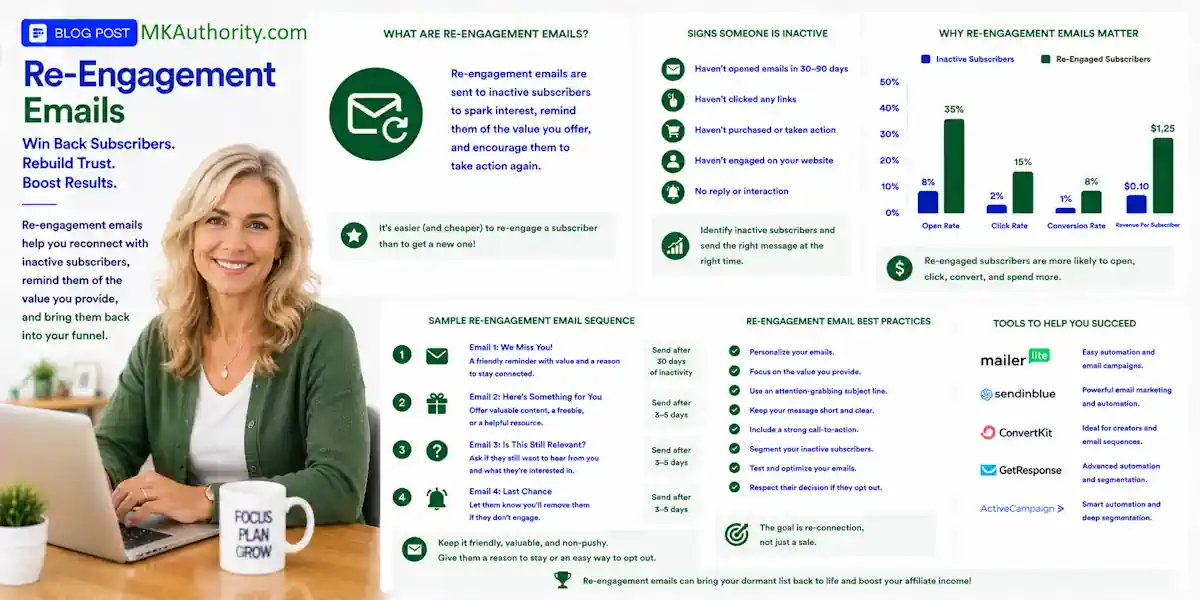

In email marketing, a 10,000-name list isn’t the asset many beginners think it is. If most people never open, click, reply, or buy, those names can hurt your inbox placement and waste your follow-up effort. Re-engagement emails should be employed. A re-engagement email is a targeted message sent to inactive subscribers or cold leads to spark their interest and clean your mailing list
Well-timed re-engagement emails give each email subscriber a simple choice: reconnect, change what they receive, or leave cleanly. That’s better for them, better for your sender reputation, and better for the people who still want your affiliate tips.
You don’t need hype, fake deadlines, or a giant discount to wake up a list. You need clear segmentation, useful messages, and a firm stopping point.
Key Takeaways On Re-engagement Emails
- Review inactive subscribers after roughly 60 to 90 days, adjusting the window to your sending frequency and audience behavior.
- Segment people by clicks, purchases, topic interest, traffic source, and preferences instead of sending the same win-back message to everyone.
- Use a simple three-email sequence over about one week: offer useful content, give subscribers a relevant choice, then close the loop clearly.
- Track clicks, replies, preference updates, complaints, purchases, and cleared commissions—not opens alone—to measure real list quality and affiliate value.
- Suppress subscribers who remain silent after the campaign and waiting period, while honoring unsubscribes, complaints, and hard bounces immediately.
Why re-engagement emails matter for affiliate marketers
A re-engagement campaign is a short set of emails sent to people who’ve gone quiet. The goal isn’t to drag every old contact back into your funnel. It’s to find subscribers who still want help, then stop mailing people who don’t.
For most affiliate lists, start reviewing an inactive subscriber after 60 to 90 days without meaningful activity. Adjust that window to your sending frequency and target audience habits. If you email once a month, 30 days tells you almost nothing. If you email three times a week, 90 days is a long silence.
Don’t rely on opens alone. Privacy features can make email engagement data messy. Clicks, replies, preference changes, site visits, and purchases offer clearer signals.
Inactive subscribers and disengaged affiliate partners are different
An inactive subscriber is a person who joined your list and stopped engaging with your emails. A disengaged affiliate partner is a promoter, referral, or team member who has stopped sending clicks, leads, or sales.
These groups need different follow-up.
A subscriber may want fewer emails, a different topic, or a fresh resource. For buyers, relevant follow-up can support customer retention and reinforce customer loyalty. An affiliate partner may need new creatives, an updated tracking link, a product update, or a direct conversation about what isn’t working.
Don’t send your affiliate partners the same “we miss you” promo sequence you send to subscribers. Keep partner communication in its own CRM tag or list.
Segment inactive subscribers before sending anything
The first step is auditing your subscriber list before activating rules or broadcasts. Blasting every quiet name with the same message is fast, but it isn’t smart. Some people are new leads who never clicked. Others bought before, clicked affiliate links, or came from a specific traffic source.
Your re-engagement emails will work better when traffic source, product interest, and past actions shape a behavior-based personalization strategy.
Start with behavior, not a blanket date
Create simple groups inside your email platform before you turn on automation:
- People who joined but never clicked an email or visited your site.
- Previous clickers who have gone quiet for 60 to 90 days.
- Buyers or product customers who may want support, updates, or related training.
- Leads from a particular opt-in page, such as a free traffic guide or home-business checklist.
- Subscribers who clicked one topic often, such as paid ads, autoresponders, or affiliate tools.
A person who wanted Facebook lead generation advice should not get a random crypto offer or network-marketing promotion. That mismatch is how good subscribers turn into unsubscribes.
Keep abandoned cart reminders in a separate workflow when you use them. They address a different stage of intent than a broad re-engagement effort.
Your original lead source matters too. If you bought traffic, track whether reactivated leads move back into your sales pipeline and later produce sales with cleared commissions. A big list is nice. An engaged list that produces profit is much better.
Protect your sender reputation before the campaign
Before sending to a cold segment, remove hard bounces, known invalid addresses, past complainers, and people who already unsubscribed. Treat these as unengaged contacts, and don’t try to win back someone who clearly asked to be left alone.
High engagement helps mailbox providers see your emails as wanted mail. That is why Litmus’ email deliverability overview puts engagement and list hygiene near the center of inbox placement.
Also check your sending domain, sender name, and authentication setup. This affiliate email deliverability guide covers the basics, including SPF, DKIM, DMARC, honest subject lines, and permission-based follow-up.
For future list growth, a double opt-in can improve permission quality before new subscribers enter your list.
A smaller list that clicks is usually worth more than a huge list that ignores you.
Use three re-engagement emails in a win-back sequence
Three emails over about one week is enough for most affiliate marketers. This controlled win-back email campaign uses an automated email sequence. It gives subscribers a fair chance to respond without hammering inboxes.
Every email should have one clear call-to-action. Click for a resource. Update preferences. Reply with a question. Stay subscribed. Simple works.
Email 1, Day 0: Send a re-activation email and ask for a small signal
Subject: Still interested in affiliate marketing tips?
Write a short, human check-in:
“Hi there, I noticed you haven’t opened my recent emails. No problem, inboxes get busy.
I’m still sharing practical affiliate marketing ideas, traffic tips, and tools that can help you build something real. If that still interests you, take a look at this week’s guide.”
Link to a useful article, video, checklist, or beginner training. Don’t lead with your biggest affiliate offer. First, give them a reason to remember why they joined.
Email 2, Day 3: Give them a relevant choice
Subject: Want more traffic, better follow-up, or fewer emails?
This email can offer a choice through tagged links. One link might lead to traffic training. Another can lead to email follow-up guidance. A third can open your preference center.
A self-selected topic or preference gives you useful zero-party data for future relevance.
If you recommend an affiliate product, be straight about it. A simple disclosure near the link is enough: “This email includes an affiliate link. I may earn a commission if you buy, at no extra cost to you.”
No wild income claims. No “last chance” language when it isn’t true. Keep the call to action clear, such as “Watch the short training” or “See the tool details.”
Email 3, Day 7: Close the loop cleanly
Subject: Should I stop sending these?
Now be direct:
“I only want to send emails to people who want them. If you’d like to stay, click below and tell me what topics you want. If not, you don’t need to do anything. I’ll stop sending regular promotional emails soon.”
This message often gets replies because it feels honest. Anyone who clicks, replies, or updates preferences goes back into the active segment. Everyone else moves to suppression after your set waiting period.
Email subject lines and offers that don’t feel spammy
Subject lines don’t need to scream. They need to sound like a real email from someone the reader recognizes.
Keep the subject line clear and believable
Try subject lines like these, then test them against your own audience:
- “Still want help building your affiliate list?”
- “A quick question about these emails”
- “Which topic would help you most right now?”
- “Want fewer emails from me?”
- “I saved this traffic guide for you”
- “Should I close your spot on this list?”
Avoid fake reply prefixes, all caps, excessive punctuation, and made-up scarcity. They may get a short-term open, but they also train people not to trust you.
Offer a choice instead of pushing a discount
A discount code makes sense only when you own the product or have a genuine, merchant-approved promotion. Most affiliates don’t need to invent one to re-engage people.
Offer something useful instead. A short guide on choosing traffic sources. A plain-English autoresponder comparison. A checklist for tracking clicks, leads, refunds, and commissions.
If you need a simple platform to handle tags, click triggers, and exit rules, compare affiliate marketing autoresponders before building the automation.
Automate the decision, then track what pays
Set up email automation to trigger the workflow when a subscriber meets your inactivity rule. A marketing automation platform can manage waits, conditions, and exit rules for one measurable email campaign.
The workflow sends Email 1, waits, then checks for clicks, replies, purchases, or preference updates.
Any positive action removes the subscriber from the win-back sequence and returns them to a relevant active list. A hard bounce, complaint, or unsubscribe should suppress the contact immediately.
Watch metrics that show list quality
Open rates can be interesting, but they aren’t the finish line. Stronger email engagement evidence comes from click-through rates, replies, preference updates, and purchases.
| Metric | What to measure | What it tells you |
|---|---|---|
| Deliverability | Delivered emails and hard bounces | Whether your list and sending setup are healthy |
| Re-engagement rate | Unique clickers, replies, or preference updates | How many inactive people became active again |
| Complaint and unsubscribe rate | Complaints and opt-outs per send | Whether your message is unwanted or mismatched |
| Revenue per reactivated subscriber | Cleared commissions divided by reactivated people | Whether the campaign produces real affiliate value |

Track cleared commissions, not only reported sales, and compare them with customer acquisition costs. Refunds, cancellations, reversals, and tracking gaps can erase a good-looking result. Also check whether reactivated buyers build customer loyalty and qualified leads return to the sales pipeline.
For a fuller view of what your list is worth, use an earnings per subscriber formula. Include autoresponder costs, landing-page fees, paid retargeting, creative costs, and refunds. A $40 commission isn’t $40 profit if half the margin disappears elsewhere.
Test carefully, then stop emailing the silent group
Don’t test five things at once. Change one variable, such as the subject line, email topic, send day, or call to action. Keep the audience segment and core message the same so you can read the result.
Give the campaign a fair test
Split a segment into two similar groups. Send one version to each group, then compare unique clicks, replies, preference updates, complaints, and cleared earnings later.
A flashy subject line may win opens but bring weak clicks. A lower-open email may attract people who actually read, click, and buy. That difference separates vanity numbers from useful results.
Know when to remove inactive contacts
After the three-email sequence and a reasonable waiting period, suppress inactive subscribers and other unengaged contacts. Don’t keep resending the same offer every month, hoping luck will show up.
List cleaning can protect email deliverability because it reduces the volume of mail sent to people who never engage. Inbox Monster’s re-engagement guidance gives a helpful look at the win-back-or-let-go approach.
Keep unsubscribes suppressed so you don’t add them back by mistake. Use a visible unsubscribe link, your real business details, truthful subject lines, and clear affiliate disclosures. For future sign-ups, consider double opt-in when it’s appropriate for your audience and business.
The FTC’s CAN-SPAM compliance guide is a useful baseline, but rules can differ by country and audience. This isn’t legal advice, so check the requirements that apply to your business.
Frequently Asked Questions
What are re-engagement emails?
Re-engagement emails are a short sequence sent to subscribers who have stopped interacting with your messages. They give people a chance to reconnect, update their preferences, or leave the list cleanly.
When should I target an inactive subscriber?
For most affiliate lists, begin reviewing subscribers after 60 to 90 days without meaningful activity. Adjust that period based on how often you send emails and how quickly your audience typically engages.
How many emails should a win-back sequence include?
Three emails sent over about one week are enough for most affiliate marketers. Each email should have one clear action, such as clicking a resource, updating preferences, replying, or confirming that the subscriber wants to stay.
When should I remove an inactive subscriber?
After the sequence and a reasonable waiting period, suppress anyone who has not clicked, replied, purchased, or updated their preferences. Remove hard bounces, complaints, and unsubscribes immediately to protect your sender reputation and respect subscriber choices.
Keep the List Useful, Not Just Large
The quiet names on your list are not a scorecard. They are people who either need a better reason to engage or no longer want your emails.
Use re-engagement emails to give them that fair choice. Bring active people back with useful content, respect those who opt out, and build customer retention on permission, not list size, while strengthening customer loyalty and protecting your sender reputation by letting the silent group go.