 Malcolm Keith 2026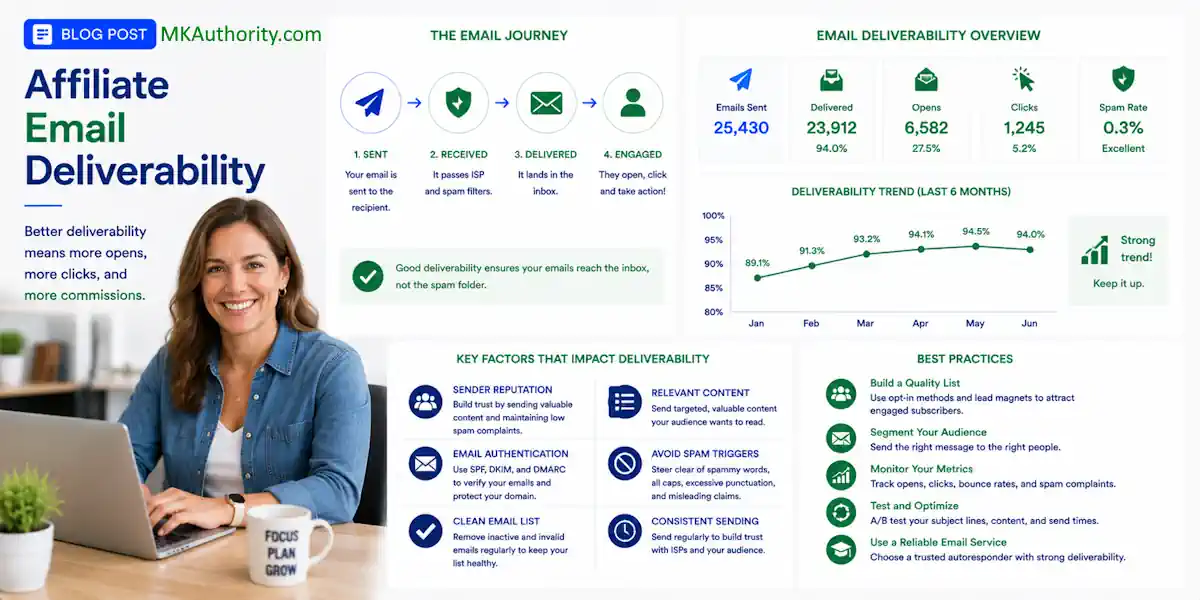

You can have a great affiliate offer, a cool bonus, and traffic coming in every day. But if your emails land in spam, none of that matters. Affiliate email deliverability is what decides whether your inbox placement succeeds and subscribers actually see your message or never know you sent it.
The good news is that you don’t need to be some technical email wizard to master email deliverability. You need permission, a real sender identity, useful follow-up, and a clean list. Start there, and you give your email business a much stronger chance.
Key Takeaways
- Build a list only from people who knowingly opted in to hear from you by using a double opt-in process.
- Set up SPF DKIM and DMARC before sending serious volume.
- Use your real name, business name, and a clear affiliate disclosure.
- Start slowly with new domains and newer lists, then mail engaged readers first while carefully managing your sending volume.
- Watch complaints, bounces, clicks, and unsubscibes after every campaign.
Affiliate Email Deliverability Starts Before Your First Send
Affiliate email deliverability isn’t fixed by a clever subject line or a new autoresponder. It begins with your setup and the quality of the people on your list.
First, send from a domain you control. A branded email address such as hello@yourbrand.com looks more professional than a random free mailbox. It also gives you control over your sender reputation as your list grows.
Some advanced marketers even use secondary domains to protect their core brand infrastructure from potential deliverability fluctuations.
Next, set up email authentication by configuring the three records your email platform will ask for:
- SPF tells inbox providers which services can send email for your domain.
- DKIM adds a signature that helps prove the message came from you.
- DMARC tells providers what to do when an email fails those checks.
This might sound technical at first. Most reputable email platforms walk you through it step-by-step, and their support documents usually tell you exactly what records to add at your domain host.
Don’t skip it because you’re only sending a few emails. You want to build good habits while the list is small. A new sender who suddenly blasts thousands of messages can look suspicious, even when their intentions are good.
Choosing the right email service provider also matters. Before joining one, check its affiliate-link rules, complaint policies, authentication options, and list-cleaning features. These affiliate marketing autoresponders can help beginners compare the parts that matter beyond flashy templates.
A good email service provider can help protect your reputation, but it can’t rescue a list built from people who never wanted your emails.
Use a real “From” name too. “Malcolm from MKAuthority” gives subscribers a person and brand they can recognize. “Support Team” or a strange nickname often creates confusion. Confused people delete emails. Annoyed people report spam.

Build an Email List With Clear Permission
The easiest way to hurt your sender reputation in affiliate marketing is relying on cold email, practicing cold outreach, or emailing people who gave their details to somebody else. Those contacts did not ask to hear from you. That distinction is a big deal.
A traffic source may tell you its leads are interested in business opportunities, affiliate tools, or making money online. That does not automatically mean you have permission to drop them into your personal autoresponder.
Blind emailing usually gets low response, higher complaints, and a damaged sender reputation. Worse yet, importing purchased or scraped contacts almost guarantees you will hit hidden spam traps that instantly destroy your inbox placement.
Instead, bring traffic to an opt-in page. Explain what the subscriber will receive, how often you plan to email, and why the free guide, checklist, training, or video is worth their email address. Keep it simple. No mystery boxes. No bait-and-switch nonsense.
A clear affiliate opt-in page attracts people who actually want the topic. That may feel slower than importing a big pile of addresses, but a smaller responsive list is worth far more than a large dead one.
Double opt-in is also worth considering, especially when you use giveaways, paid traffic, or broad traffic sources.
The subscriber enters their email, then confirms it through a message in their inbox. Yes, fewer people may finish the process. But the people who do are more likely to be real, engaged, and ready to hear from you.
Your lead magnet should match the offer you plan to promote later. If someone opts in for a guide about free website traffic, do not immediately hammer them with crypto offers or unrelated health products. That is how trust disappears fast.
A relevant welcome series helps. Deliver the promised freebie first. Introduce yourself. Give a useful tip. Ask what they need help with. Then make a recommendation when it fits. This look at welcome sequence unsubscribe mistakes is a useful reminder that the first few emails can either build trust or push people away.
Write Affiliate Promotions People Want to Open
Your email doesn’t need flashing graphics, ten links, and all-caps promises to get attention. In fact, that kind of message can create the exact problem you’re trying to avoid, often triggering spam filters that keep your messages out of the inbox entirely.
Write like a real person talking to another real person. Tell subscribers what the email is about. Use a plain subject line that matches the content inside. If your subject says “Your free traffic checklist,” the email should deliver that checklist. Don’t hide a hard pitch behind a fake personal subject line like “Quick question” or “Re: your account.”
Avoid subject lines loaded with pressure:
- “ACT NOW!!! LIMITED TIME FREE MONEY!!!”
- “You have been selected for a secret payment”
- “Open immediately or lose this forever”
They may get a short-term click from someone, but they also make people suspicious. Inbox providers look closely at your engagement rate, and readers do too.
Affiliate email deliverability improves when subscribers open, read, click, reply, and stay subscribed. Higher open rates come naturally when your audience learns to trust your subject lines. So write emails that have one clear purpose. One helpful idea. One recommended tool. One action to take.
Be open about affiliate relationships and your broader affiliate marketing strategy.
A simple line works well: “This email includes an affiliate link, which means I may earn a commission if you buy through it, at no extra cost to you.” Put it near the recommendation, not buried in tiny text at the bottom.
That honesty protects your credibility. You are not pretending to be a neutral reviewer when you may earn a commission. You are sharing a recommendation and being straight about it. That’s how you build a list that sticks around.
Keep affiliate links under control too. Two or three relevant links are usually plenty. Use your email platform’s normal tracking links where possible. Avoid link shorteners that hide the destination, and check every link before mailing.
For broader ideas on list building, content, and campaign measurement, this affiliate email marketing overview has useful context.
Use This Affiliate Email Deliverability Pre-Send Checklist
Run through this short list before every broadcast. It takes a few minutes and can save you a lot of trouble.
- Confirm the subscribers opted in to receive your emails.
- Send from your normal branded domain and recognizable sender name.
- Check that SPF, DKIM, and DMARC are active.
- Make the subject line honest, clear, and free from fake urgency.
- Put your affiliate disclosure close to the affiliate recommendation.
- Test every link, including your unsubscribe link.
- Remove hard bounces and suppress repeat soft bounces.
- Send a test email to Gmail, Outlook, Yahoo, and Apple Mail if possible.
- Check the email on a phone before you schedule it.
- Mail engaged subscribers first when the list is new or inactive.
If you are working through a domain warm-up for a fresh setup, do not jump from 20 emails today to 5,000 tomorrow. When you warm up email campaigns, you should carefully control your sending volume by starting with your most engaged contacts.
Increase your volume gradually over several sends because consistency beats random bursts.
Rules differ by country, email provider, and audience. This is practical marketing guidance, not legal advice. Check your platform’s policies and get qualified advice when you need help with compliance requirements.

Monitor the Numbers That Tell You What Happened
After sending, do not only stare at sales. Sales matter, of course, but your email metrics show whether your list is healthy enough to keep producing results.
Use this simple guide after each campaign:
| Metric | What it tells you | What to do |
|---|---|---|
| Bounce rates | Whether addresses are bad or unreachable | Remove hard bounces right away |
| Spam complaints | Whether subscribers feel your email is unwanted | Stop and review source, copy, and frequency |
| Unsubscribes | Whether content or expectations are off | Check what changed in the campaign |
| Click rate | Whether the offer and message interested readers | Test angle, call to action, and link placement |
| Replies | Whether people trust you enough to engage | Read them and use the feedback |
| Sales and refunds | Whether clicks turn into cleared commissions | Track both, not reported sales alone |
A bounce rate under 2% is a sensible target. Complaint rates should stay very low. If complaints rise toward 0.1%, take it seriously. Do not mail the same list again and hope it fixes itself. To safeguard your email deliverability, you should regularly monitor sender health using Google Postmaster Tools.
Also, watch inactive subscribers. If someone has not opened or clicked for months, do not keep pounding their inbox. Try a simple re-engagement email. Ask if they still want to hear from you. If they do not respond, suppress them as part of your routine list hygiene and list cleaning practices.
Affiliate tracking matters here as well. Use campaign labels or affiliate sub IDs to see which email, link position, and sequence produced a sale. Track clicks, opt-ins, sales, refunds, and cleared payouts separately.
A reported commission is not cash in your account. Refunds, reversals, autoresponder fees, tracking costs, and paid traffic can eat a thin margin quickly. Real numbers keep you out of fantasy land.
Frequently Asked Questions
What is affiliate email deliverability?
Affiliate email deliverability is the measure of whether your promotional emails reach subscribers’ inboxes instead of being sent to the spam folder. Good deliverability ensures that your audience actually sees your messages and has the chance to read your recommendations.
Why do I need to set up SPF, DKIM, and DMARC?
These three records act as digital authentication that proves to inbox providers like Gmail and Outlook that you are the legitimate owner of your sending domain. Setting them up protects your sender reputation and dramatically reduces the chances of your emails being blocked.
Is it okay to buy an email list to start affiliate marketing?
No, buying or scraping email lists is one of the fastest ways to destroy your sender reputation and get your account suspended. You should always build your list organically using clear opt-in pages where people explicitly ask to receive your messages.
Final Thoughts
A responsive list is not built by blasting more emails. It is built by earning permission, giving people value, and being honest about what you promote.
Set up your sending domain properly.
Keep your list clean.
Tell people who you are.
Make recommendations that fit what they asked for.
Affiliate email deliverability gets stronger, and your sender reputation improves, when your subscribers are glad to see your name in their inbox.


